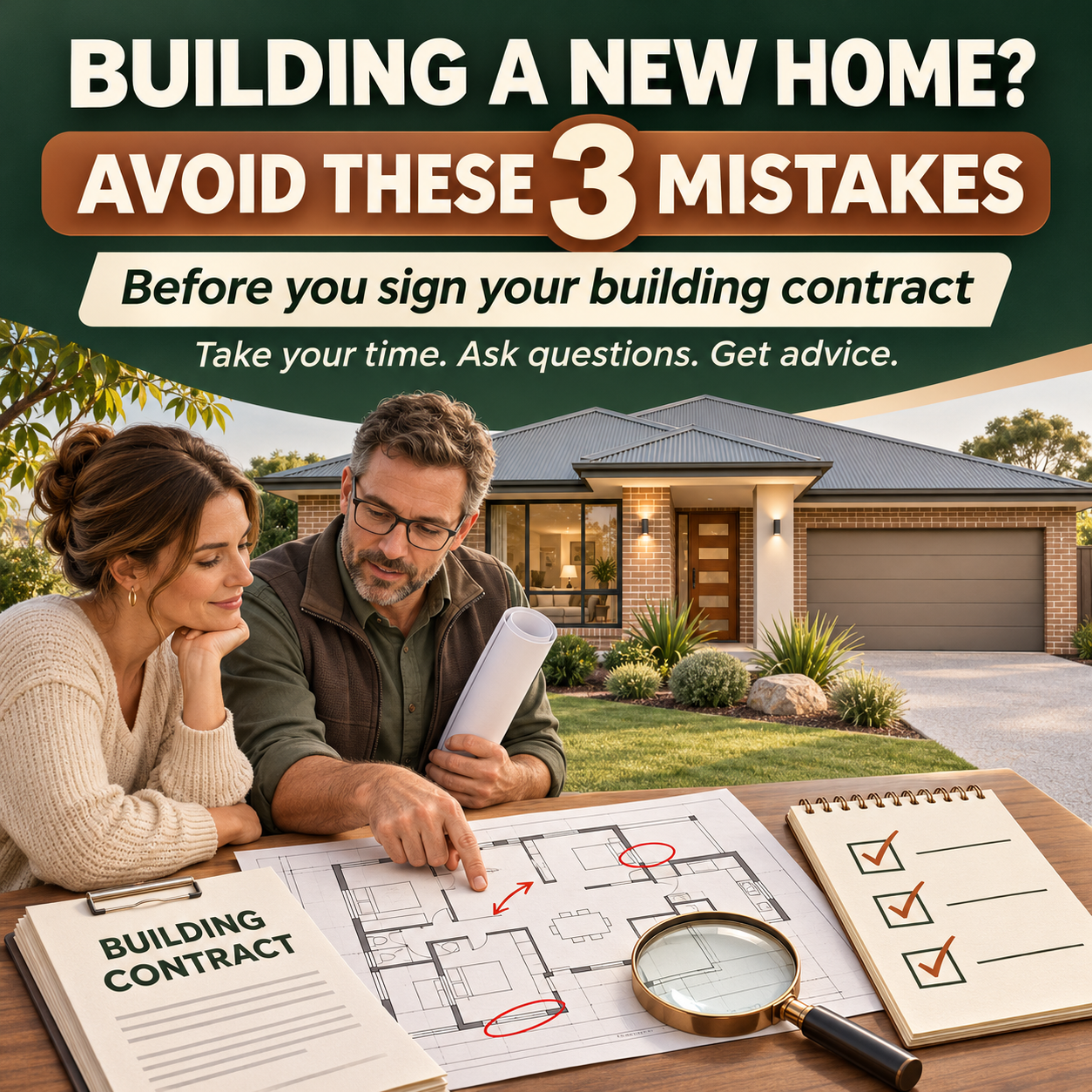
3 Home Building Mistakes to Avoid Before Signing a Contract
18th August 2025
Finance & Budgeting Pre-Construction Design & Trends Legal & Contracts First Home Buyer Investor
Building a new home in Australia? Fabian Pisano shares three common buyer mistakes and what to check in your plans, inclusions and building paperwork.
3 Home Building Mistakes to Avoid Before Signing a Contract
Building a new home is exciting. But between choosing land, comparing builders and working through paperwork, it is easy to make decisions before you fully understand them.
Perhaps you have been sent a variation with an extra charge. Maybe you assume your updated windows are already on the plans. Or you are ready to sign because everything looks close enough to what you discussed.
These are the kinds of situations explored in this Home Building Hub episode. Hosts Colin Bischof and Darren Brennan speak with building consultant Fabian Pisano about three common mistakes home buyers make during the pre-construction journey.
His advice starts with a simple message: take the time to understand what you are agreeing to.
1. Rushing decisions before you understand the details
Excitement, deadlines and a busy household can make it tempting to sign paperwork quickly and sort out the details later.
Fabian describes buyers asking for help with documents they have already signed without understanding them. In one example, a buyer wanted an explanation for a variation involving an additional $5,000.
The issue was not simply the amount. It was that the buyer did not know what the charge covered.
Before agreeing to a document or change, make sure you can explain:
- What you are approving.
- Why it is needed.
- What it costs and what that amount includes.
- Whether it changes the plans, specifications or project timing.
- Which questions still need answers.
Taking your time starts before the deadline
Darren makes a useful distinction: slowing down does not have to mean taking months to decide. Sometimes it means doing your research early or giving yourself time to review the information properly.
For example, if you are considering a block of land, ask for the available plans and documentation before the day you intend to buy. If you are approaching a building contract, allow time to review the paperwork before the signing appointment.
The aim is to arrive prepared, rather than trying to understand everything while you feel under pressure to commit.
2. Not asking questions until something goes wrong
One of the biggest challenges for new home buyers is knowing what to ask. Building professionals work with plans and specifications every day. Buyers often do not.
That knowledge gap can lead to assumptions on both sides.
Fabian encourages buyers to say when they do not understand something. You do not need to know the technical terminology to ask for a plain English explanation.
Useful questions include:
- Can you show me where this inclusion appears in my documents?
- Does this drawing show the latest changes I requested?
- What does this charge cover?
- Is this amount confirmed or an allowance?
- Does this change affect any other part of the home?
- Who can explain this in more detail?
If the person you are speaking with cannot answer, ask them to involve someone who can. As Darren explains, different people become involved throughout the building process, and their areas of expertise vary.
Ask someone to walk you through the plans
If you cannot tell how a door, window or opening is shown, say so. Understanding the drawings helps you check whether the proposed home matches your expectations.
Work through each room and think about how you will use it:
- Are doors shown where you expect them?
- Do sliding doors and windows open in the intended direction?
- Are powerpoints positioned conveniently for furniture and appliances?
- Have the electrical heights been checked?
- Are your requested window and cladding changes shown?
Colin gives the practical example of considering a powerpoint in a cupboard for charging a vacuum. Small details can be easy to overlook while you are focused on the bigger decisions.
3. Skipping an independent review when you need support
Fabian’s third mistake is committing to a major building project without having an independent person look over the documentation.
This can be especially useful if you are building for the first time, have made substantial changes or do not have time to review everything confidently.
Support does not necessarily have to cover the entire journey. In the episode, Fabian discusses help ranging from a review of the paperwork to broader assistance through pre-construction.
When considering a consultant, clarify:
- Which documents they will review.
- What their service includes and excludes.
- Their relevant experience.
- Their fees and any relationships with builders.
- Whether you will receive written findings and follow-up support.
A practical review of plans and inclusions serves a different purpose from legal advice about a contract. Be clear about the expertise you need and what the person engaged is qualified to provide.
A real example: paid upgrades missing from the drawings
Fabian shares an example involving a buyer spending approximately $950,000 with a volume builder in Melbourne.
The buyer had requested numerous changes, but some items recorded in the contract or variations were missing from the plans. Examples included window changes, additional doors and cladding changes.
The buyer also needed help understanding how to read the drawings, making those omissions difficult to spot independently.
Fabian explains that the review helped identify the discrepancies and get the plans corrected.
The lesson is straightforward: check that your documents agree with each other. An upgrade appearing in one document is a reason to check the related drawing too.
Your building paperwork is more than the contract form
A recurring point in the conversation is that buyers need to review the full set of documents, including:
- Contract terms and project details.
- Quotes or tenders.
- Specifications and inclusions.
- Architectural drawings.
- Electrical plans.
- Selection documents.
- Variations and updated pricing.
Do not focus only on the headline price or assume the standard contract form tells you everything about the home being built.
Check that the documents reference the correct versions and reflect your agreed selections. If you find conflicting information, ask for it to be clarified and corrected before proceeding.
Check allowances, credits and later variations
Fabian also describes cases where an allowance for bushfire-related requirements remained in the paperwork after information became available that should have led to its removal and a credit.
This is an example from his experience, rather than a promise that a particular allowance will be refunded.
For your own project, ask:
- What does each allowance cover?
- What information is still outstanding?
- When will the amount be reviewed?
- How will any adjustment be documented?
The episode also explores changes requested after signing. These can involve more than the price of the item itself, particularly if drawings or approval work need updating.
Before requesting a change, ask for a written explanation of the scope, pricing, any administration fee and possible timing effects. Finalising your preferences earlier may help reduce avoidable changes, although some variations may still arise.
Frequently Asked Questions
What should I check before signing a building contract?
Read the full documentation and compare the plans, inclusions, selections and pricing. Check that requested changes are recorded consistently, understand any allowances and get answers to outstanding questions.
What if I do not understand my house plans?
Ask your builder or a suitably experienced consultant to explain them room by room. Focus on doors, windows, dimensions, electrical locations and any changes you have requested.
When can I involve a building consultant?
Fabian explains that his service can assist at different points during pre-construction. Getting help before signing gives you an opportunity to raise questions and identify discrepancies earlier. Confirm the scope with the consultant you choose.
Can changes after signing involve extra fees?
The episode discusses how requested changes can require administration, revised drawings and coordination. Ask how your proposed change will be priced under your agreement before approving it.
Does using a reputable builder remove the need to check documents?
No. Fabian’s example shows that paperwork discrepancies can still occur. Reviewing your documents helps identify differences between what you expect and what has been recorded.
Glossary of Terms
-
Pre-construction:
The planning, documentation and approval stages before building work starts on site.
-
Tender:
A detailed proposal setting out the builder’s price and proposed scope of work.
-
Specifications:
Written details describing materials, products and construction requirements.
-
Inclusions:
The items and features included in the agreed scope and price.
-
Variation:
A documented change to the agreed building work or contract details, which may affect cost or timing.
-
Allowance:
An amount included for an item or requirement that may need further confirmation.
-
Cladding:
Material covering an external wall, such as boards or panels.
Key Takeaways
- Take time to understand documents before signing, and prepare early for deadlines.
- Ask questions whenever a charge, inclusion or drawing is unclear.
- Consider an independent review if you need help checking the paperwork.
- Compare your plans, specifications and variations to make sure requested changes are reflected consistently.
- Check how allowances, credits and proposed changes will be handled.
- Think through the practical details of living in your home before finalising selections.
Watch the Full Episode
Want more practical examples before choosing a builder or signing your paperwork? Join Colin Bischof, Darren Brennan and guest Fabian Pisano for the full discussion.
Watch Expert Consultant Shares Top 3 Mistake Home Buyers Make on YouTube.
About the Home Building Hub Podcast
The Home Building Hub podcast, hosted by industry experts Colin Bischof and Darren Brennan, is Australia’s premier resource for new home buyers. With weekly episodes featuring special guests, the podcast provides objective, high-quality insights into the home building process - completely free and without sales pitches. From understanding financing options to navigating the complexities of building a new home, each episode is packed with actionable advice and tips. Explore more episodes at http://www.homebuildinghub.com.au and join our growing community of informed home buyers.
Disclaimer
This article was generated by AI based on a transcript of our podcast episode and may contain inaccuracies or omissions. Whilst we’re all about providing value to you, this article should not be considered as legal or financial advice. It contains general information only and is based on the content discussed during the podcast episode. This information is relevant to the episode’s release date and may not be applicable at the time of reading. Always seek independent professional advice tailored to your personal situation before making any legal or financial decisions.