Overshadowing explained… and how it can really cost you
13th October 2025
Pre-Construction Design & Trends Legal & Contracts First Home Buyer
Discover how overshadowing regulations affect new home construction in Australia. The Home Building Hub hosts break down what to watch for, how to stay compliant, and how to protect your build from costly delays.
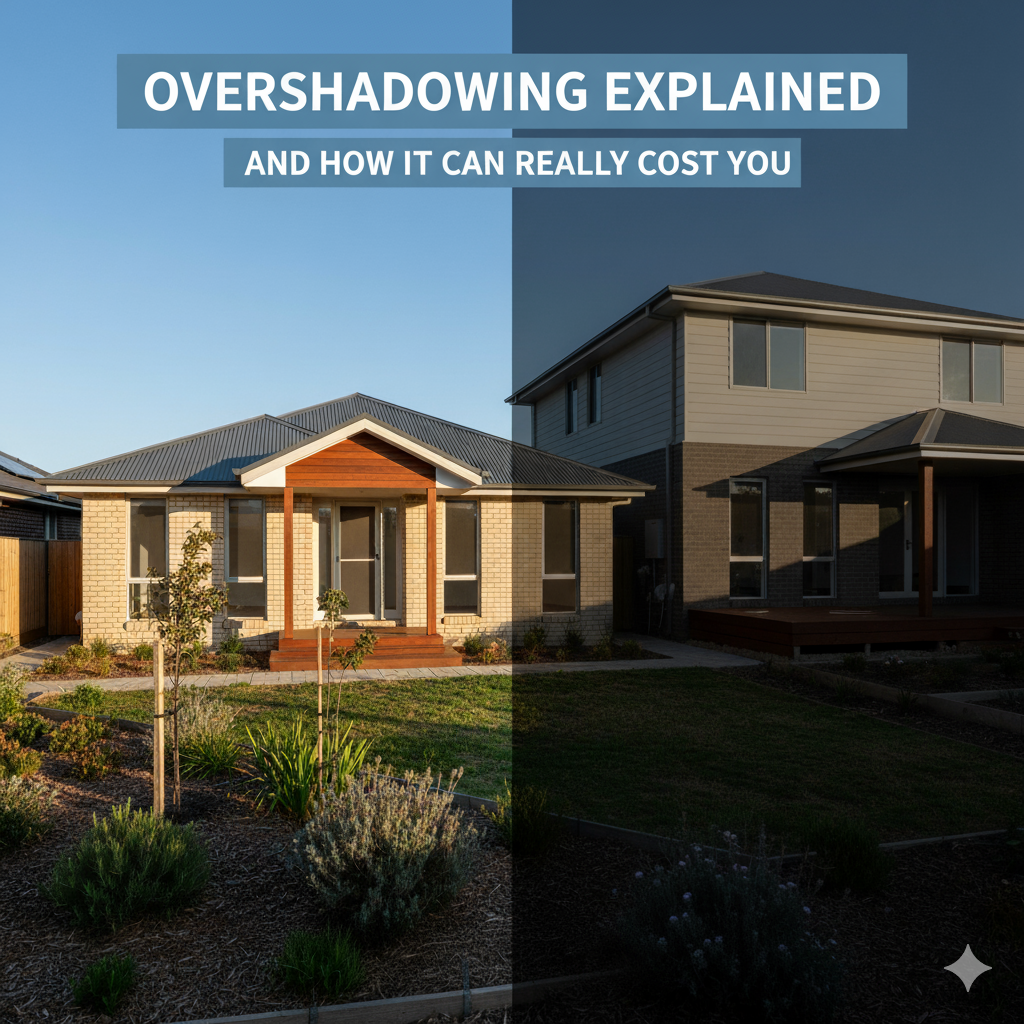
Overshadowing Explained and How It Can Really Cost You
When planning to build a new home, there’s one planning regulation that often catches buyers off guard - overshadowing. It might sound technical, but this single issue can derail your building plans, lead to costly redesigns, and delay your build approval.
In this episode of The Home Building Hub Podcast, hosts Colin Bischof and Darren Brennan unpack what overshadowing actually means, why it’s important, and how to avoid expensive surprises before it’s too late.
What is Overshadowing?
Overshadowing occurs when a new home blocks sunlight from reaching a neighbour’s private open space - usually their backyard or outdoor area.
In simple terms:
If your new home’s design stops your neighbour’s yard from getting enough sunlight, you may be breaching overshadowing regulations.
According to Victorian planning standards (and similar principles across Australia), the lesser of 75% or 40 square metres of a neighbour’s private open space must receive at least five hours of sunlight between 9am and 3pm on 22 September each year.
If your design reduces that sunlight - even unintentionally - your building permit may be refused or delayed.
When Overshadowing Becomes a Problem
Overshadowing issues commonly appear in several situations:
- Double-storey homes - Taller homes naturally cast longer shadows and can block sunlight onto neighbouring lots.
- Blocks with significant fall - If your block sits higher than your neighbour’s, even a single-storey home can overshadow their property.
- Small lot housing - On blocks under 300m², strict small-lot housing codes require at least 6m² of unshaded space. Overshadowing yourself or your neighbour can cause non-compliance.
How Builders Identify Overshadowing
Builders and designers use a shadow diagram to map out where shadows fall throughout the day.
These diagrams show shadow positions at:
9am, 10am, 11am, 12pm, 1pm, 2pm and 3pm.
They factor in:
- The slope of the land
- Building heights
- Orientation (north, south, east, west)
- Neighbouring structures
By analysing these details, your builder can see whether your home design will meet the overshadowing rules.
Solutions if Overshadowing Becomes an Issue
If your proposed design creates too much shadow, there are several ways to reduce or avoid the problem:
- Shift the house on the block - Move the home slightly forward, backward, or sideways to change how shadows fall.
- Reduce upper-storey size - A smaller second level casts less shadow.
- Lower the site cut - Slightly reducing the house height can improve compliance.
- Remove or reduce eaves - Smaller eaves mean a smaller shadow footprint.
- Lower ceiling heights - Dropping from 2700mm to 2440mm upstairs can make a difference.
- Increase fence height - Up to 2 metres is generally allowed and can offset part of the shading area.
- Apply for dispensation - In some cases, councils allow minor breaches (though approval isn’t guaranteed).
If your design still can’t comply, you may need to redesign your home - and while that’s never fun, it’s often the only way to get your build approved.
Why Timing Matters
Overshadowing regulations often depend on whether the neighbouring home already has a Certificate of Occupancy. Once the neighbour’s house is complete, your plans must comply with their existing layout and outdoor space.
That’s why Colin and Darren stress:
Start your build as soon as your land titles.
Waiting too long increases the chance that neighbours will build first, potentially limiting what you can do with your design.
How to Avoid Overshadowing Problems Before You Buy
Before purchasing a block or finalising your plans:
- Ask your builder to check for overshadowing risk.
- Review the land contract for any building envelopes or restrictions.
- If nearby homes are already built, inspect their orientation and height.
- Bring up any concerns early in the planning stage.
- Be open with your builder about what surrounds your block.
- By getting professional advice early, you can avoid finding out about overshadowing only after you’ve paid for designs or signed contracts.
Key Takeaways
- Overshadowing restricts how much sunlight a neighbour’s private open space can lose due to your new home.
- Regulations require at least 40m² (or 75%) of that space to receive five hours of sunlight between 9am and 3pm on 22 September.
- Double-storey and sloping sites are most at risk.
- Solutions include shifting the home, lowering the design, or reducing the upper level.
- Start your build early to avoid neighbours’ homes restricting your options.
- Always talk openly with your builder and seek expert planning advice before you commit.
🎧 Listen or watch the full episode:
Overshadowing explained… and how it can really cost you
Glossary of Terms
Private Open Space: The outdoor area of a property (like a backyard or courtyard) used for recreation.
Shadow Diagram: A technical drawing showing how shadows fall at different times of day and year.
Dispensation: A formal request to council asking for approval to vary or relax a specific planning rule.
Building Envelope: A boundary within which a home must be constructed, often set out in a land contract or estate covenant.
Certificate of Occupancy: An official document confirming a home meets building standards and can be lived in.
FAQs
- Does overshadowing apply to all new homes in Australia?
Most states follow similar principles, but specific rules and measurements may vary. Always check your local council’s planning scheme.
- Can I build a double storey home on a small lot?
Yes, but your design must comply with overshadowing and unshaded space requirements. Your builder can model this before submission.
- What if my neighbour agrees to the shadow?
Even with their consent, council may still refuse if the breach exceeds the regulated limits.
- Will changing builders fix the problem?
No - all builders must follow the same regulations. The shadow result will be the same for the same footprint.
About the Home Building Hub Podcast
The Home Building Hub podcast, hosted by industry experts Colin Bischof and Darren Brennan, is Australia’s premier resource for new home buyers. With weekly episodes featuring special guests, the podcast provides objective, high-quality insights into the home building process - completely free and without sales pitches. From understanding financing options to navigating the complexities of building a new home, each episode is packed with actionable advice and tips. Explore more episodes at http://www.homebuildinghub.com.au and join our growing community of informed home buyers.
Disclaimer
This article was generated by AI based on a transcript of our podcast episode and may contain inaccuracies or omissions. Whilst we’re all about providing value to you, this article should not be considered as legal or financial advice. It contains general information only and is based on the content discussed during the podcast episode. This information is relevant to the episode’s release date and may not be applicable at the time of reading. Always seek independent professional advice tailored to your personal situation before making any legal or financial decisions.