
4 Tips to Avoid Overwhelm When Visiting Display Homes
28th October 2025
Finance & Budgeting Pre-Construction First Home Buyer Investor Design & Trends
Visiting display homes? Discover four practical tips to avoid overwhelm, compare layouts and turn your ideas into a clear wish list for your new home.
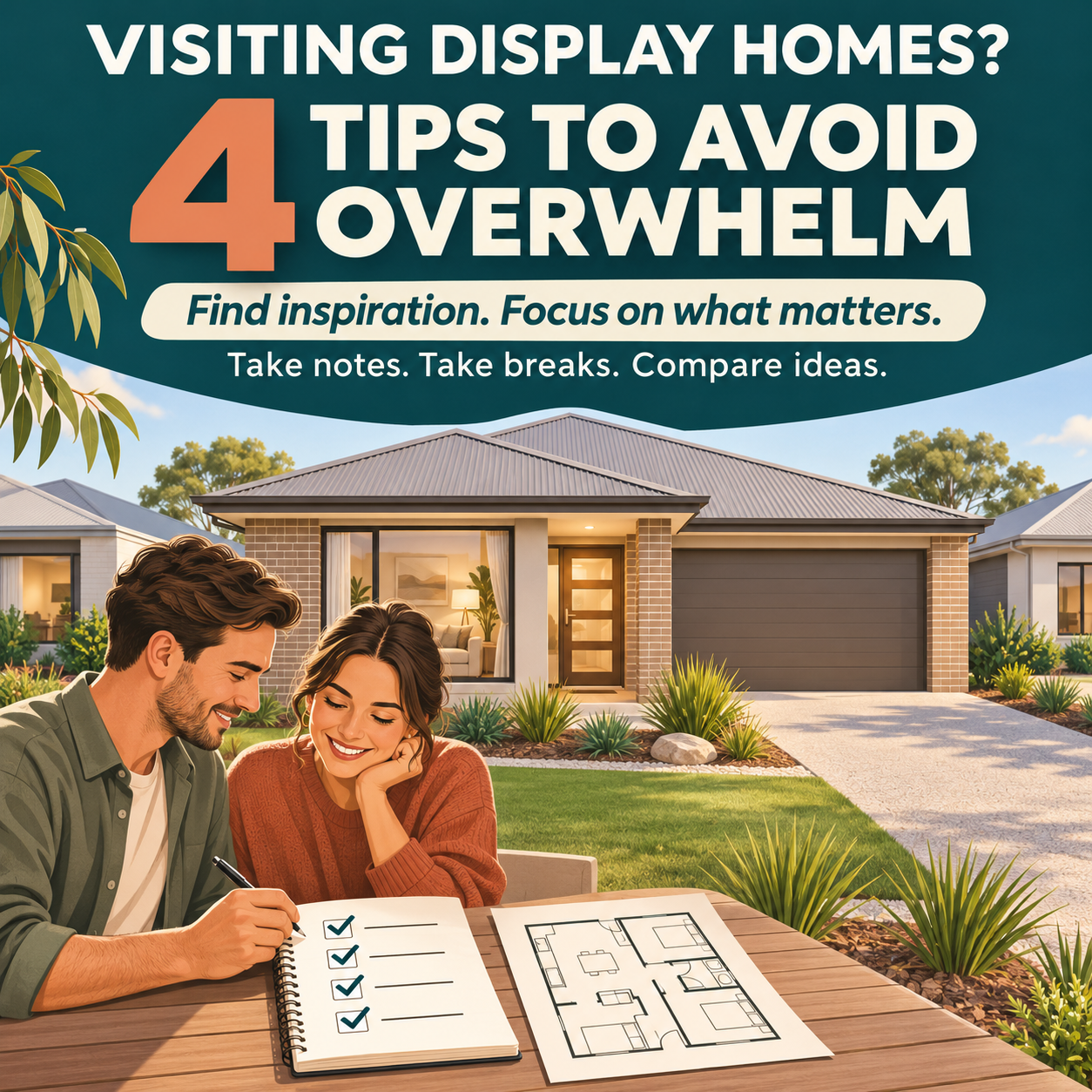
4 Tips to Avoid Overwhelm When Visiting Display Homes
Visiting display homes is an exciting part of planning a new home build. You can walk through different layouts, explore kitchen ideas and get a feel for the spaces you might want to live in.
But after a few homes, the details can start to blur. Which house had that kitchen? Where did you see the separate lounge? And did you actually like the layout, or just the furniture?
In Episode 121 of the Home Building Hub podcast, Colin Bischof and Darren Brennan share four tips to avoid overwhelm when visiting display homes. Inspired by Colin's recent visit to display villages with his partner, Tracy, the conversation focuses on buyers at the early inspiration stage.
You do not need to choose your builder or finalise your floor plan on your first visit. Your goal can simply be to understand what you like, what you dislike and what could suit your household.
Why Visit Display Homes When You Are Still Gathering Ideas?
Online floor plans and photographs are useful starting points. Walking through a home gives you another way to explore how a design could work in everyday life.
A display home visit can help you consider:
- How the kitchen, dining and living areas connect.
- Whether bedrooms have the separation you want.
- Which spaces feel comfortable for your household.
- What styles, finishes and features appeal to you.
- Which design choices you would avoid.
As Darren explains in the episode, your stage of life makes a difference. An open play area near the kitchen might appeal to parents with young children. A household with teenagers may prefer a separate living room with a door.
The useful question is whether the design suits the way you live.
1. Set Your Intention and Record Five Likes and Five Dislikes
Before you start, decide what you want from the visit. If you are there for inspiration, keep that purpose in mind as you walk through each home.
Colin suggests recording five things you liked and five things you did not like from your visit. Learning what you would avoid can be just as valuable as finding a feature you love.
Your notes might include:
- A kitchen layout that makes meal preparation feel practical.
- A living area that feels too small for your furniture.
- A bedroom position that offers useful privacy.
- A second lounge that would suit your children.
- A feature that looks impressive but would not suit your routine.
Label Your Notes and Photos
Record the builder, home design and display village alongside your observations. Ask before taking photographs and follow any photography rules at the display.
Instead of writing "nice kitchen", explain what worked: "Kitchen overlooks the living area, so we could keep an eye on the children while cooking."
That detail makes the idea easier to use later.
If you are visiting as a couple, write your lists separately before comparing them. You may notice different things, and both perspectives can help shape your future home.
2. Avoid Getting Bogged Down in the Details Too Early
Inclusions, promotions and upgrade packages can quickly take over a display home visit. They matter when you are assessing a builder's offer, but they can distract you when you are only starting to gather ideas.
Colin and Darren suggest being clear with the sales consultant about where you are in the process.
You could say:
"We're at the early inspiration stage and just looking at layouts and ideas today. Could we take a brochure and your business card? We'll get in touch when we're ready to discuss the next steps."
This helps set expectations respectfully. As Darren points out, asking for contact details is part of the consultant's role. If you do not want follow-up contact yet, explain that politely.
Keep Your Focus on How the Home Works
During an inspiration visit, concentrate on:
- Floor plan flow.
- Room relationships and privacy.
- Features that solve a practical need.
- Styles you would like to explore further.
Keep your budget in mind as you collect ideas. When you move towards comparing builders and quotes, clarify what is included, what costs extra and whether the design suits your land. The episode's advice is about managing your attention during the early stage of the journey.
3. Stop When the Homes Start Blending Together
There is no prize for seeing every home in a display village in one day.
Colin recalls that after around five or six homes, he and Tracy were already trying to remember which house contained a particular feature. He describes the point where you keep walking but stop absorbing the details as "zombie mode".
Signs you have reached that point include:
- Forgetting which home had the feature you liked.
- Moving through rooms without really considering them.
- Finding it difficult to explain how one layout differs from another.
- Feeling tired, confused or overloaded with ideas.
There is no fixed number of display homes everyone should visit. Pay attention to how much you are taking in.
When the homes begin to blur, finish for the day and return another time if needed. A shorter visit with useful notes can give you more to work with than a long afternoon you struggle to remember.
4. Discuss Your Findings on the Same Day
Before the details fade, set aside time to review what you saw. Colin suggests a coffee afterwards or a conversation over dinner that evening.
Use your photos and notes to discuss:
- Your five favourite features.
- Your five dislikes.
- Which ideas you both agree on.
- Where your preferences differ.
- Which features would make daily life easier.
This is where inspiration starts becoming a useful brief for your new home.
Turn Your Ideas Into Needs and Wants
For example, you might identify a separate living area as a need because members of your household use it at different times. A particular decorative finish might be a want that you can assess once you understand the cost.
The distinction will be different for every buyer. The aim is to create a list that reflects your circumstances and can later be considered alongside your budget.
As the hosts explain, these ideas become pieces of a puzzle. A clear picture of your priorities can help a consultant suggest a floor plan that brings those pieces together.
A Simple Checklist for Your Next Display Village Visit
- Decide whether today's visit is mainly for inspiration.
- Take your phone or a notebook to record observations.
- Note the builder and design name for ideas you want to remember.
- Ask permission before taking photographs.
- Record five likes and five dislikes.
- Explain your stage of the journey to consultants.
- Stop when you are no longer taking in useful details.
- Review your findings that day and start a needs and wants list.
Frequently Asked Questions
Can I visit display homes before I am ready to build?
Yes. This episode specifically discusses visiting during the early inspiration stage. Be upfront with consultants about your purpose and use the visit to explore layouts, styles and household priorities.
How many display homes should I visit in one day?
There is no set number. Colin noticed details becoming blurry after around five or six homes during his visit, but your experience may differ. Stop when you are no longer absorbing or remembering what you see.
What should I look for when visiting display homes?
Focus on how the layout could support your daily routine. Consider living areas, bedroom separation, kitchen connections and the features you would use. Record dislikes as well as favourites.
Should I compare promotions on my first visit?
If you are only gathering inspiration, the hosts suggest keeping promotions and detailed inclusions discussions for a later stage. Before committing to a builder or design, you will still need to understand the inclusions, upgrades and total quoted cost.
What should I do after visiting a display village?
Review your notes and photographs on the same day. If you visited with a partner, compare your individual lists and use the discussion to develop shared priorities.
Glossary of Terms
-
Display home:
A completed home that a builder uses to showcase a design, finishes and features.
-
Display village:
A location where buyers can visit a collection of display homes, often from several builders.
-
Floor plan:
A drawing showing the arrangement of rooms and spaces within a home.
-
Inclusions:
The features, materials and fixtures specified as part of a builder's particular offer or quote.
-
Upgrade:
A change from the specified offering that may involve an additional cost.
-
Needs and wants list:
A way to separate essential requirements from preferences you can assess against your budget.
Key Takeaways
- Set a clear intention for your display home visit and record five likes and five dislikes.
- During the inspiration stage, focus on designs and practical features without getting distracted by promotions.
- Stop when the homes begin to blend together.
- Discuss your findings that day while the details are fresh.
- Use what you learn to develop a needs and wants list that can guide later design and budget discussions.
Watch the Full Episode
Ready to make your next display village visit more useful? Join Colin Bischof and Darren Brennan for the full discussion.
Watch Episode 121: 4 Tips to Avoid Overwhelm When Visiting Display Homes
About the Home Building Hub Podcast
About the Home Building Hub Podcast: The Home Building Hub podcast, hosted by industry experts Colin Bischof and Darren Brennan, is Australia’s premier resource for new home buyers. With weekly episodes featuring special guests, the podcast provides objective, high-quality insights into the home building process - completely free and without sales pitches. From understanding financing options to navigating the complexities of building a new home, each episode is packed with actionable advice and tips. Explore more episodes at http://www.homebuildinghub.com.au and join our growing community of informed home buyers.
Disclaimer
Disclaimer: This article was generated by AI based on a transcript of our podcast episode and may contain inaccuracies or omissions. Whilst we’re all about providing value to you, this article should not be considered as legal or financial advice. It contains general information only and is based on the content discussed during the podcast episode. This information is relevant to the episode’s release date and may not be applicable at the time of reading. Always seek independent professional advice tailored to your personal situation before making any legal or financial decisions.