
How Acoustic Requirements Could Add Thousands to Your Build
10th November 2025
Finance & Budgeting Pre-Construction Design & Trends First Home Buyer Investor Upsizing & Downsizing Sustainability & Energy Efficiency
Building near a road, railway or airport? Learn how acoustic requirements could add thousands to your new home build and what to check before buying land.
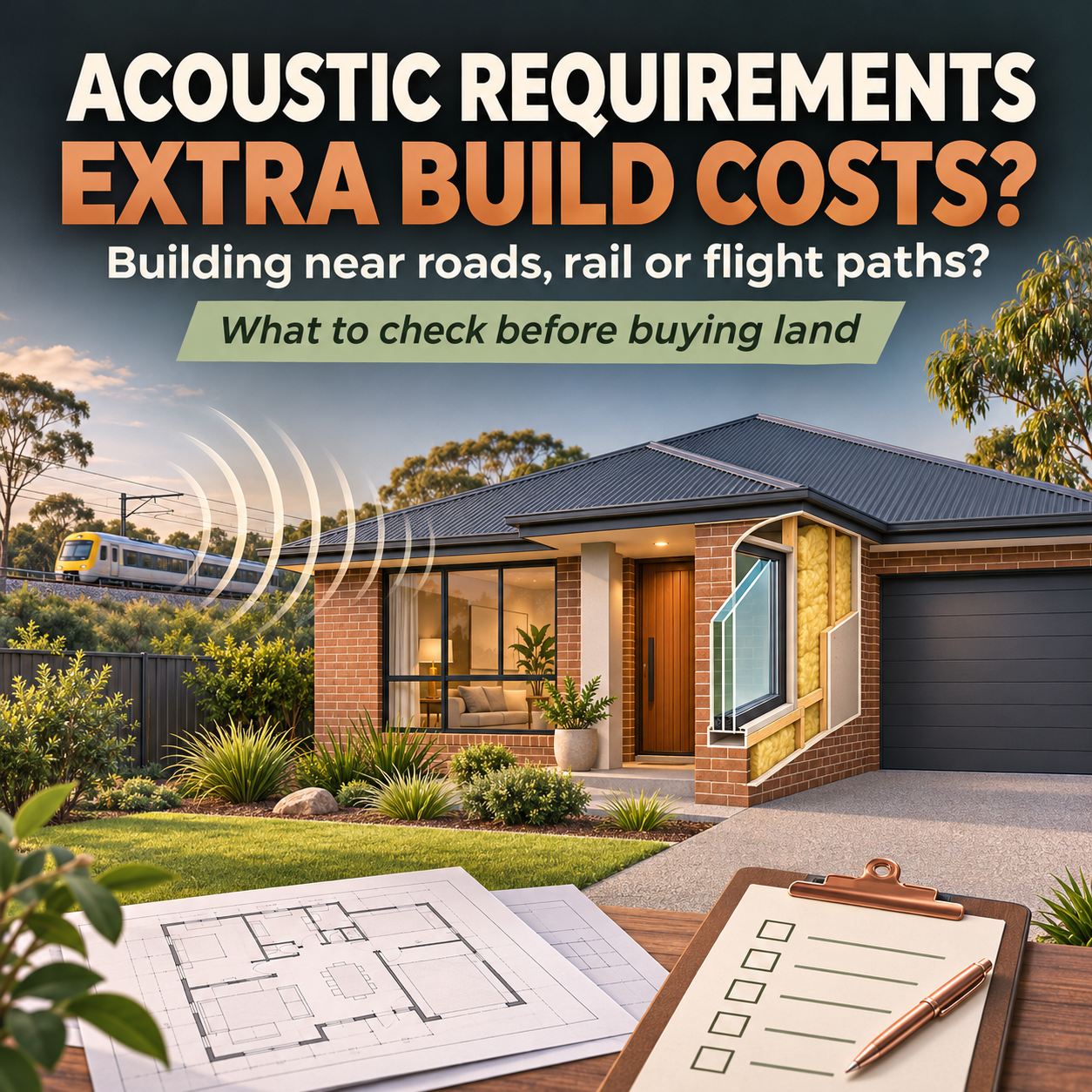
How Acoustic Requirements Could Add Thousands to Your Build
You have found a block of land, chosen a home design and started working through your budget. Then an unexpected requirement appears: extra construction work to reduce outside noise.
Depending on your block and design, acoustic requirements could add thousands to your new home build.
In this Home Building Hub Podcast episode, Colin Bischof and Darren Brennan explain what buyers should check, which parts of a home may need upgrading and why identifying the requirements early matters.
The discussion focuses on Victoria. Buyers elsewhere in Australia should confirm the requirements that apply locally.
What are acoustic requirements?
Acoustic requirements are measures intended to reduce external noise entering a home. They can be relevant when building near:
- Freeways and busy roads.
- Railway lines.
- Airports and flight paths.
- Industrial areas or other noise sources.
The aim is to improve indoor comfort, particularly where you sleep, relax or watch television.
The hosts use the term “acoustic overlay”. Treat this as a prompt to investigate noise-related requirements, rather than assuming every affected block sits within a planning control with that exact name.
Victoria’s planning policy recognises building siting, orientation and internal layout as ways to manage noise impacts near transport and other noise sources.
How much could acoustic upgrades cost?
Colin and Darren discuss a rough upgrade range of $5,000 to $15,000, depending on the home and the block’s requirements.
Darren also mentions around $1,500 for an individual acoustic assessment in the circumstances discussed.
These are indicative figures from the episode, not current quotes or fixed fees. Ask whether assessment costs are additional to your builder’s upgrade allowance.
Your actual cost may depend on:
- Noise exposure at the block.
- The size and design of your home.
- Window sizes, locations and specifications.
- Wall, roof, ceiling and door construction.
- What your builder already includes.
- Assessment and documentation requirements.
Ask your builder: “What is the total cost of making this design comply on this particular block?”
How do you check whether your land is affected?
Start before committing to a land purchase or finalising your home design.
Ask your developer, builder and conveyancer or solicitor to help identify the relevant documents. These may include:
- The land contract and title information.
- The plan of subdivision and referenced documents.
- Any Section 173 agreement.
- Planning permit conditions.
- Estate design guidelines.
- Acoustic reports, lot schedules or category maps.
Some developers provide plans showing different acoustic categories across an estate. Obtain the information for your exact lot and ask your builder what it means for your proposed design. Category labels should not be assumed to mean the same thing across estates.
What is a Section 173 agreement?
In Victoria, a Section 173 agreement is a legal agreement that can set conditions or restrictions on the use or development of land. When recorded on title, its obligations can bind future owners.
Not every Section 173 agreement concerns noise. Obtain and review the actual document rather than relying on its name or a passing reference.
Darren shares an example where a plan of subdivision referred to an agreement that was missing from the supplied contract documents. That document needed to be obtained before the requirements could be understood.
Check resale blocks too
A block being resold can still carry acoustic obligations.
Whether you buy from a developer or an existing owner, ask your conveyancer or solicitor to review the relevant documents. Do not assume an obligation disappears when the land changes hands.
Which parts of your home might need upgrading?
Acoustic treatment involves the home’s external structure as a whole. Examples discussed in the episode include:
-
Windows:
Specified double glazing, laminated glass and improved seals.
-
Doors:
Heavier or solid-core doors where specified, with appropriate sealing.
-
Walls:
Specified wall systems and insulation.
-
Roofs and ceilings:
Additional insulation, plasterboard layers or other treatments.
-
Eaves and gaps:
Sealing or construction details specified in the acoustic design.
These are possible treatments, rather than a list every affected home will need.
Does double glazing automatically meet the requirements?
Do not assume so.
The hosts note that some builders already include double glazing and additional insulation, which may reduce the extra work needed. However, the actual specifications still need to be checked against your project’s requirements.
Ask: “Does the glazing included in my quote satisfy the acoustic specification for this block and design?”
Can acoustic requirements affect your home design?
Potentially, yes.
Changes to windows, facades or roof styles can affect the acoustic solution. A large window facing a noise source, for example, may require a different specification or a design adjustment.
Before approving changes, ask:
- Does the revised design still meet the requirements?
- Does the acoustic assessment need updating?
- Will the change affect the price?
- Are the required treatments included in the plans and specifications?
In the process described by the hosts, acoustic documentation and specified treatments feed into the building permit assessment. Confirm the assessment, approval and sign-off steps for your own project early.
Will an affected block be cheaper?
It might be, but there is no guarantee.
The hosts explain that some developers may price affected lots to reflect anticipated acoustic costs. A lower land price does not automatically make the overall house and land package better value.
Compare:
- The land price.
- Assessment and reporting fees.
- Required construction upgrades.
- Any effect on your preferred design.
- The location’s suitability for your lifestyle.
Acoustic treatment aims to improve conditions indoors. It does not remove traffic, train or aircraft noise from outdoor areas.
Questions to ask before buying land
Use this checklist when discussing a block:
- Is this lot subject to noise-related construction requirements?
- Can I have the relevant reports, agreements and lot information?
- What requirements apply to my chosen design?
- Which treatments are already included in the builder’s price?
- What additional costs remain?
- Is an individual assessment required, and what does it cost?
- Who organises documentation and approvals?
- Could design changes affect compliance or pricing?
Clear answers early can help you build a more realistic budget.
Frequently Asked Questions
Does every home near a main road need acoustic upgrades?
No. Proximity is a reason to investigate, but it does not tell you exactly which obligations apply. Check the requirements for the particular lot and proposed development.
Can I remove required acoustic items to save money?
Where acoustic treatments form part of applicable requirements, they cannot simply be removed as optional upgrades. Ask whether an alternative compliant solution is available.
Will acoustic treatment make my home completely silent?
No treatment should be assumed to eliminate all outside noise. The aim is to achieve the specified indoor acoustic outcome. Results depend on design, construction, the noise source and how the home is used, including whether windows are open.
Does every affected lot need on-site noise measurements?
Darren describes an individual assessment involving site measurements. Confirm what your project needs, as assessment methods and the use of existing estate reports can vary.
Will acoustic upgrades increase resale value?
They may improve comfort and appeal to buyers, but a particular increase in resale value is not guaranteed.
Glossary of Terms
-
Acoustics:
The study of sound and how it behaves.
-
Acoustic assessment:
A professional evaluation used to identify noise exposure and suitable design measures.
-
Acoustic attenuation:
Reducing sound as it passes through a material or construction system.
-
Building envelope:
The external parts of a building, including walls, windows, doors and the roof.
-
Decibel (dB):
A unit used to express sound levels.
-
Laminated glass:
Glass made with an interlayer between glass layers; specified products can provide acoustic benefits.
-
Section 173 agreement:
A Victorian legal agreement that can regulate the use or development of land.
Key Takeaways
- Check acoustic requirements before committing to land and finalising your home design.
- The hosts discuss approximately $5,000 to $15,000 in upgrades and a possible assessment fee of around $1,500. Obtain a project-specific quote.
- Review the actual documents, including any referenced Section 173 agreement.
- Confirm which treatments your builder already includes.
- Recheck compliance when changing windows, facades or roof designs.
- Compare total land and build costs, alongside indoor and outdoor liveability.
Watch or Listen to the Episode
Hear Colin Bischof and Darren Brennan explain the checks buyers can make before committing to a block.
Watch or listen to How Acoustic Requirements Could Add Thousands to Your Build
Further Reading
About the Home Building Hub Podcast: The Home Building Hub podcast, hosted by industry experts Colin Bischof and Darren Brennan, is Australia’s premier resource for new home buyers. With weekly episodes featuring special guests, the podcast provides objective, high-quality insights into the home building process - completely free and without sales pitches. From understanding financing options to navigating the complexities of building a new home, each episode is packed with actionable advice and tips. Explore more episodes at http://www.homebuildinghub.com.au and join our growing community of informed home buyers.
Disclaimer: This article was generated by AI based on a transcript of our podcast episode and may contain inaccuracies or omissions. Whilst we’re all about providing value to you, this article should not be considered as legal or financial advice. It contains general information only and is based on the content discussed during the podcast episode. This information is relevant to the episode’s release date and may not be applicable at the time of reading. Always seek independent professional advice tailored to your personal situation before making any legal or financial decisions.