Free Home Building Guide - 120+ Podcast Episodes in One Practical Resource
24th November 2025
Finance & Budgeting Pre-Construction First Home Buyer Investor Upsizing & Downsizing Design & Trends News & Industry Insights
Planning a new home? Explore Home Building Hub’s free guide covering budgets, land, home designs, builder quotes and practical building checklists.
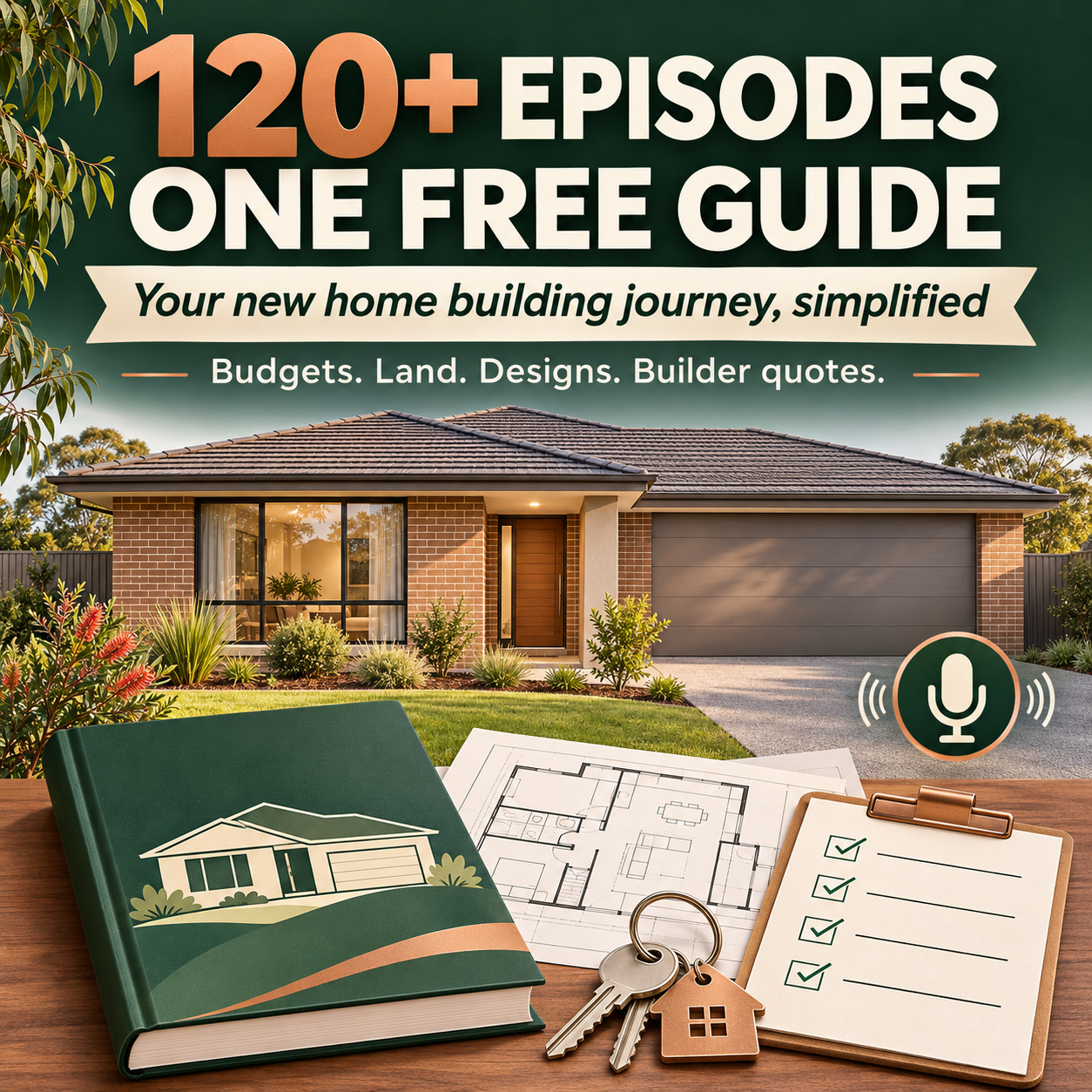
Free Home Building Guide - 120+ Podcast Episodes in One Practical Resource
Building a new home comes with plenty of questions. How much should you budget beyond the house price? Is the block you like suitable for your design? And how do you compare building quotes when every builder presents things differently?
In “120+ Episodes of Advice, Packed Into One Free Guide”, Home Building Hub hosts Colin Bischof and Darren Brennan introduce a resource designed to make those decisions easier.
Drawing on nearly three years of podcast conversations at the time of recording, the guide brings together practical tips, checklists and tools for navigating the home building journey. It gives you a starting point without having to work through more than 120 episodes first.
Here are the main areas covered in the episode and how you can use them when planning your new home.
What is included in the free home building guide?
Colin and Darren describe the guide as a practical overview, with links to resources you can use at different stages of building.
The episode highlights six main areas:
- Finance and budgeting.
- Choosing suitable land.
- Estate guidelines and design requirements.
- Finding the right home design.
- Comparing building quotes.
- Tools and checklists for planning, handover and moving in.
Some resources have a Victorian focus, as the hosts acknowledge. Many of the planning questions are useful more broadly, but buyers outside Victoria should check which details apply to their location.
1. Budget for more than the house price
One of the strongest messages from the episode is that your building budget needs to cover the whole journey.
It is easy to concentrate on the advertised house price and overlook the other expenses that may come before, during or after construction.
Colin and Darren highlight costs such as:
- Site costs.
- Conveyancing.
- Landscaping and fencing.
- Rent while your new home is being built.
- Loan payments during the construction period.
- Service connection fees when moving in.
- Removalist costs.
Which costs apply will depend on your circumstances and what your building quote includes.
Ask about exclusions as well as inclusions
Understanding what is included is only half the conversation. Colin encourages buyers to ask what is missing from the quote.
Useful questions include:
- What work will I need to organise separately?
- Are landscaping and fencing included?
- Which costs are still estimates?
- What expenses should I allow for before moving in?
The guide includes a budget template, but the hosts’ broader point is simple: get your budget written down. Whether you use a spreadsheet, a notebook or another tool, make sure the figures reflect your expected expenses throughout the build.
2. Check the land before committing
A block’s width and depth do not tell you everything about how suitable it is for your home.
Darren explains that buyers also need to understand features such as orientation, easements, setbacks, fill and fall. These can influence the home design and the work required on the site.
For example, two blocks with similar dimensions may have very different slopes. A block that looks suitable on a sales plan still needs a closer look.
Before committing, discuss the block with a building consultant and ask:
- Can the home design I want fit on this block?
- How much slope is there across the site?
- Is there known fill that needs further investigation?
- Are there easements or setbacks that affect the layout?
- What site information is needed before costs can be assessed?
Darren also recommends checking that boundary pegs are present and the site is clear of rubbish around settlement. Raise missing pegs or dumped material with the relevant parties so you understand what needs to happen next.
3. Understand estate guidelines and their cost implications
If you are buying in an estate, check the design guidelines early.
Colin explains that these may address matters such as:
- Facade design and external materials.
- Setbacks.
- Building height.
- Energy performance requirements.
- The appearance of the home from the street.
The key question is how the requirements affect the home you want and the price you have been quoted.
Ask for the relevant documents and have your building consultant explain which requirements have been allowed for. If you are comparing blocks in several estates, compare the guidelines too.
Buying through a private seller or real estate agent does not replace the need to check the requirements attached to the land. Confirm the relevant documents with your conveyancer and building team before making decisions.
4. Choose a home design around your needs and wants
Display homes are useful for exploring layouts, finishes and ideas. They can also make it difficult to separate what you need from what simply looks appealing on the day.
The guide includes a needs and wants tool to help you organise your priorities.
Start by separating:
-
Needs:
Features that are essential for your household.
-
Wants:
Features you would like if the budget allows.
That gives you a clearer basis for discussing designs and upgrades with a consultant.
Look beyond the display home price
Darren suggests asking what customers typically spend building a particular design, alongside understanding its base price and display upgrades.
A highly upgraded display may include features you would never choose. Its total price may therefore be a poor guide to the version you actually want.
Use the typical spend as context, then request a quote for your own block, inclusions and selections. Ask the consultant to explain:
- What comes as standard.
- Which displayed features cost extra.
- What your preferred changes would add.
- Which estate requirements need to be included.
5. Compare building quotes on the same basis
Comparing building quotes is one of the biggest challenges discussed in the episode.
Builders may use different formats, terminology, inclusions and promotions. Looking at the final price alone can leave you comparing different scopes of work.
The guide’s quote comparison tool includes three options:
-
Basic comparison:
A straightforward overview of the main items.
-
Itemised comparison:
A closer look at inclusions, promotions and differences.
-
Builder versus builder comparison:
A more detailed breakdown that accounts for items included by one builder but missing from the other.
Investigate price differences
If one quote is substantially cheaper, ask what explains the difference. Check the specifications, exclusions, allowances and scope before deciding which offers better value for your needs.
A lower price alone does not establish what has been included or the quality you will receive.
Colin suggests asking building consultants to help explain competing quotes. Use those conversations to identify differences, then request written clarification of anything unclear.
6. Use checklists beyond the planning stage
The resources discussed are intended to support more than the initial purchasing decisions.
Colin and Darren mention:
- A needs and wants analysis.
- Finance and budgeting tools.
- An easy investor checklist for preparing a quote brief.
- Explanations of land, drawing and building quote terminology.
- Quote comparison tools.
- A handover checklist template.
- A moving-in checklist.
- Foundation care and maintenance information, including a CSIRO fact sheet.
These tools can help you organise questions and keep track of tasks. For maintenance, use the information alongside the instructions supplied for your particular home. A general checklist should not be treated as a guarantee of warranty coverage.
How to access the guide
In the episode, Colin and Darren direct listeners to the Home Building Hub community on Skool to access the free guide and resources.
Start with the episode linked below for their access instructions. You can also visit the Home Building Hub website for further information.
Glossary of home building terms
-
Inclusions:
The products, features and work specified as part of your quoted price.
-
Exclusions:
Items or work that are outside the quoted scope.
-
Site costs:
Costs associated with preparing and adapting the site for the proposed home. The scope needs to be checked in your quote.
-
Orientation:
The direction a block or home faces and its relationship to sunlight.
-
Easement:
A right affecting part of the land, often associated with access or services, that may restrict building in that area.
-
Setback:
The required distance between a building and a boundary or other reference point.
-
Fill:
Material added to land to change its level.
-
Fall:
The change in ground level across a site.
-
Estate design guidelines:
Requirements governing aspects of homes built within a particular estate.
-
Handover:
The stage when the completed home is transferred to the owner under the building arrangements.
Frequently asked questions
Who is the free home building guide for?
The episode presents it as a resource for people planning a new home, including first-time builders and investors. It brings together an overview of common decisions with practical tools and checklists.
Is the guide only relevant to Victoria?
The hosts acknowledge a Victorian focus in some resources. Many general planning ideas are useful elsewhere, but location-specific requirements should be checked before relying on them.
Should I speak to a builder before buying land?
That is one of Darren’s main recommendations. An early discussion can help identify whether your preferred design suits the block and what site questions need further investigation.
How can I compare quotes from different builders?
Compare the scope, specifications, inclusions, exclusions and allowances. The guide includes several comparison formats, and the hosts suggest asking consultants to explain differences between quotes.
Do I need to listen to all 120+ episodes first?
No. The guide is introduced as a way to bring together the main lessons and resources in one place. You can then explore individual episodes for more detail on topics relevant to your build.
Key Takeaways
- Build a budget that includes expenses beyond the house price.
- Ask what is excluded from every quote.
- Discuss land suitability with a building consultant before committing.
- Check estate requirements and whether their costs are included.
- Separate your design needs from optional wants.
- Compare building quotes using equivalent scope and specifications.
- Use the guide’s tools to organise planning, handover and moving-in tasks.
Watch the full episode
Ready to organise your home building plans? Join Colin Bischof and Darren Brennan as they explain the guide and share practical lessons from more than 120 podcast episodes.
Watch “120+ Episodes of Advice, Packed Into One Free Guide” on YouTube
About the Home Building Hub Podcast
The Home Building Hub podcast, hosted by industry experts Colin Bischof and Darren Brennan, is Australia’s premier resource for new home buyers. With weekly episodes featuring special guests, the podcast provides objective, high-quality insights into the home building process - completely free and without sales pitches. From understanding financing options to navigating the complexities of building a new home, each episode is packed with actionable advice and tips. Explore more episodes at http://www.homebuildinghub.com.au and join our growing community of informed home buyers.
Disclaimer
This article was generated by AI based on a transcript of our podcast episode and may contain inaccuracies or omissions. Whilst we’re all about providing value to you, this article should not be considered as legal or financial advice. It contains general information only and is based on the content discussed during the podcast episode. This information is relevant to the episode’s release date and may not be applicable at the time of reading. Always seek independent professional advice tailored to your personal situation before making any legal or financial decisions.