
Colour Boards vs Colour Appointment - What's the difference?
8th December 2025
Finance & Budgeting Pre-Construction Design & Trends Legal & Contracts First Home Buyer Investor
This article explains the difference between colour boards and colour selection appointments when building a new home in Australia, helping buyers understand which option best suits their budget, timeline and level of customisation. It breaks down the pros and cons of each approach so you can make confident, stress-free decisions during the home building process.
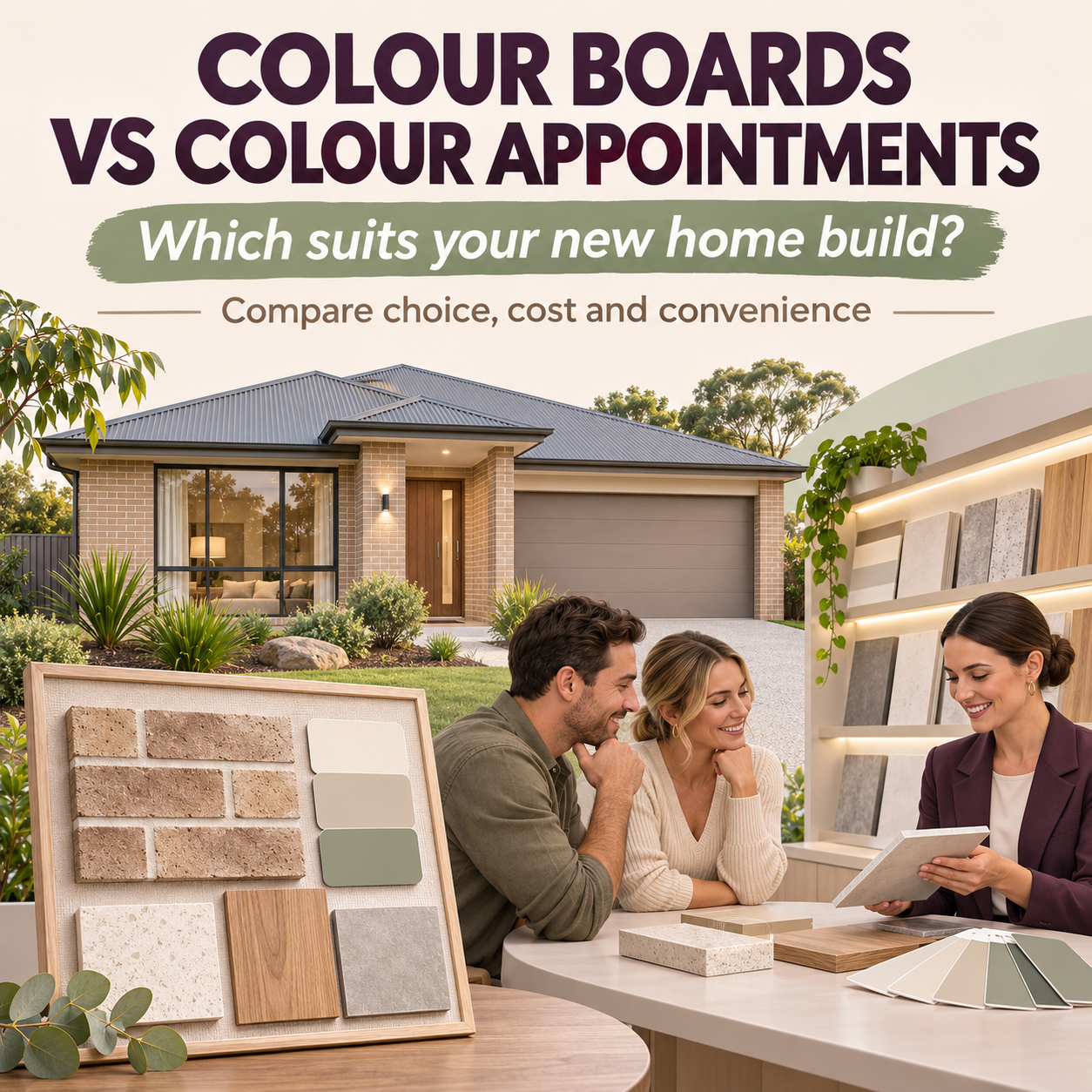
Colour Boards vs Colour Appointment - What’s the Difference?
When building a new home in Australia, one of the most exciting and sometimes overwhelming stages is choosing your colours and finishes. Two common approaches builders offer are colour boards (also called colour palettes) and colour selection appointments.
But what’s the difference between the two, and how do you know which one is right for you?
In this guide, we break it down in simple terms so you can make a confident decision when planning your new home build.
What Are Colour Boards in Home Building?
A colour board (or colour palette) is a pre-selected range of internal and external finishes curated by professional interior designers.
Instead of choosing every single item individually, everything is already grouped together into a cohesive style.
These are often labelled with names like:
- Coastal
- Hamptons
- Urban
- Classic
What’s typically included in a colour board?
A standard colour board package usually includes:
- Bricks and external finishes
- Roof colours
- Flooring options
- Paint colours
- Kitchen cabinetry
- Benchtops
- Tapware and handles
Everything is pre-matched so the home looks cohesive without needing design experience.
Benefits of Colour Boards
Colour boards are popular for good reason, especially in streamlined building processes.
Key advantages:
- Fast and simple process - no long design appointments required
- Cost certainty - fixed pricing or clearly defined upgrade costs
- Low stress - ideal for people who don’t want too many decisions
- Designer curated - professionally styled combinations
- Quick approvals - often suits developer requirements
- Great for first home buyers and investors
As discussed in the episode, colour boards are especially helpful if you:
- Don’t want to feel overwhelmed
- Prefer speed over customisation
- Are building an investment property
- Just want to get the build moving quickly
They remove decision fatigue completely.
Limitations of Colour Boards
While convenient, colour boards do come with trade-offs.
Main limitations include:
- Limited or no customisation
- Fixed selection (A, B, C or D options only)
- Minimal ability to change individual items
- Less flexibility for personal design preferences
For example, if you want a different brick or a unique feature finish, you may not be able to change it unless it’s within the pre-set range or required for compliance reasons.
What Is a Colour Selection Appointment?
A colour selection appointment is a more in-depth, personalised design consultation with a builder’s consultant or interior designer.
This usually takes place in a dedicated colour studio where you physically select every finish for your home.
Think of it like a showroom experience where all materials are displayed together.
What happens at a colour appointment?
You’ll typically choose:
- Bricks and roof colours
- Flooring (carpet, timber, hybrid etc.)
- Kitchen cabinetry and benchtops
- Tapware and fixtures
- Tiles and splashbacks
- Electrical finishes
- Paint colours
It’s a hands-on experience where you build your home’s look step by step.
Benefits of Colour Selection Appointments
This option offers a much higher level of control and creativity.
Key advantages:
- Full customisation of finishes
- Personal design input on every detail
- Access to a wider range of products
- Guided expert advice from consultants
- Ideal for owner-occupiers wanting a dream home
It’s particularly valuable if:
- You care about design details
- You want a highly personalised home
- You’re building your forever home
- You enjoy the design process
Many people also enjoy attending together as a couple or family, making it part of the overall home building journey.
Limitations of Colour Selection Appointments
While highly flexible, colour appointments also come with considerations.
Key drawbacks:
- More time-consuming (2 - 6 hours per session or multiple sessions)
- Can be overwhelming due to too many choices
- Higher potential cost variations
- Requires more preparation and research
- Decisions are final once locked in
It’s not uncommon for people to feel overwhelmed walking into a large design studio filled with hundreds of options.
Preparation is key.
Colour Boards vs Colour Appointment - Key Differences
Here’s a simple breakdown of how they compare:
Speed
- Colour boards: Fast, often immediate selection
- Colour appointments: Longer process, scheduled sessions required
Customisation
- Colour boards: Limited options
- Colour appointments: Fully customisable
Cost Control
- Colour boards: Fixed pricing or known upgrade costs
- Colour appointments: Flexible, can vary significantly
(Examples discussed in the episode ranged from a few thousand dollars up to hundreds of thousands depending on selections.)
Stress Level
- Colour boards: Low stress, simplified decision-making
- Colour appointments: Can be overwhelming without preparation
Ideal For
- Colour boards: Investors, first home buyers, time-poor builders
- Colour appointments: Owner-occupiers, custom builds, design-focused clients
How Much Can Colour Selections Cost?
Costs vary widely depending on the builder, inclusions, and upgrades.
Typical ranges mentioned include:
- Single storey homes: around $3,000 - $7,000 upgrades (average example)
- Double storey homes: around $20,000+ upgrades (average example)
- High-end selections: can exceed $40,000 - $50,000+
- Extreme custom cases: up to $400,000 (premium custom build example)
The key takeaway is this: Your final spend depends entirely on your selections and your builder’s standard inclusions.
How to Decide Which Option Is Right for You
Choosing between colour boards and a colour appointment comes down to your priorities.
Ask yourself:
- Do I want speed or flexibility?
- Do I enjoy design decisions?
- What is my budget for upgrades?
- Am I building to live in or invest?
- How much time can I commit to the process?
A simple guide:
- Choose colour boards if you want:
-
-
Speed
-
Simplicity
-
Cost control
-
Low stress
-
- Choose colour appointments if you want:
-
-
Personalisation
-
Design control
-
A highly customised home
-
A hands-on experience
-
There is no right or wrong choice - just what suits your situation best.
Pro Tip from the Episode
A key insight shared in the discussion is to visit the colour studio before your appointment if possible.
Many builders offer tours so you can:
- Familiarise yourself with the space
- Reduce overwhelm on the day
- Understand the selection process
- Prepare your ideas in advance
Doing a bit of homework upfront (Pinterest boards, inspiration photos, and style choices) can also make the process much smoother.
Key Takeaways
- Colour boards are pre-designed palettes created by professionals for speed and simplicity
- Colour appointments allow full customisation but require more time and decision-making
- Colour boards are ideal for investors and first home buyers wanting less stress
- Colour appointments suit owner-occupiers wanting a personalised home
- Costs vary significantly depending on builder inclusions and upgrade choices
- Preparation is the key to avoiding overwhelm in colour appointments
- Touring the colour studio beforehand can make the process much easier
Glossary of Terms
Colour Board (Colour Palette) A pre-selected group of finishes and materials designed to create a cohesive home style.
Colour Selection Appointment A personalised consultation where you choose all internal and external finishes for your home.
Inclusions Items included in the base price of your home build contract.
Upgrades Optional improvements or premium selections that increase the total build cost.
Owner-Occupier Someone building a home to live in themselves rather than rent or sell.
FAQ
What is the main difference between colour boards and colour appointments?
Colour boards are pre-selected design packages, while colour appointments allow full customisation of your home finishes.
Are colour boards cheaper?
They can be more cost-controlled because selections are pre-set, but upgrades still vary depending on builder options.
How long does a colour appointment take?
Anywhere from 2 to 6 hours per session, sometimes spread over multiple days for larger homes.
Can I change my mind after the colour appointment?
Usually no, once selections are locked in they form part of your contract and changes may cost extra or cause delays.
Who should choose colour boards?
First home buyers, investors, or anyone who wants a simple, fast, and stress-free building process.
Do I need to prepare for a colour appointment?
Yes, preparation is highly recommended. Style research and visiting the studio beforehand can significantly reduce overwhelm.
Listen to the Episode
Watch or listen to the full discussion here: https://www.youtube.com/watch?v=XeUkAcN7Egk
About the Home Building Hub Podcast:
The Home Building Hub podcast, hosted by industry experts Colin Bischof and Darren Brennan, is Australia’s premier resource for new home buyers. With weekly episodes featuring special guests, the podcast provides objective, high-quality insights into the home building process - completely free and without sales pitches. From understanding financing options to navigating the complexities of building a new home, each episode is packed with actionable advice and tips. Explore more episodes at http://www.homebuildinghub.com.au and join our growing community of informed home buyers.
Disclaimer:
This article was generated by AI based on a transcript of our podcast episode and may contain inaccuracies or omissions. Whilst we’re all about providing value to you, this article should not be considered as legal or financial advice. It contains general information only and is based on the content discussed during the podcast episode. This information is relevant to the episode’s release date and may not be applicable at the time of reading. Always seek independent professional advice tailored to your personal situation before making any legal or financial decisions.