Building a Home in 2026: 6 Key Steps to Get Ready
22th December 2025
Finance & Budgeting Pre-Construction Design & Trends Legal & Contracts First Home Buyer Investor Upsizing & Downsizing
Planning to build a home in 2026? Explore six practical steps to prepare your finance, compare builders, research land and shortlist your new home design.
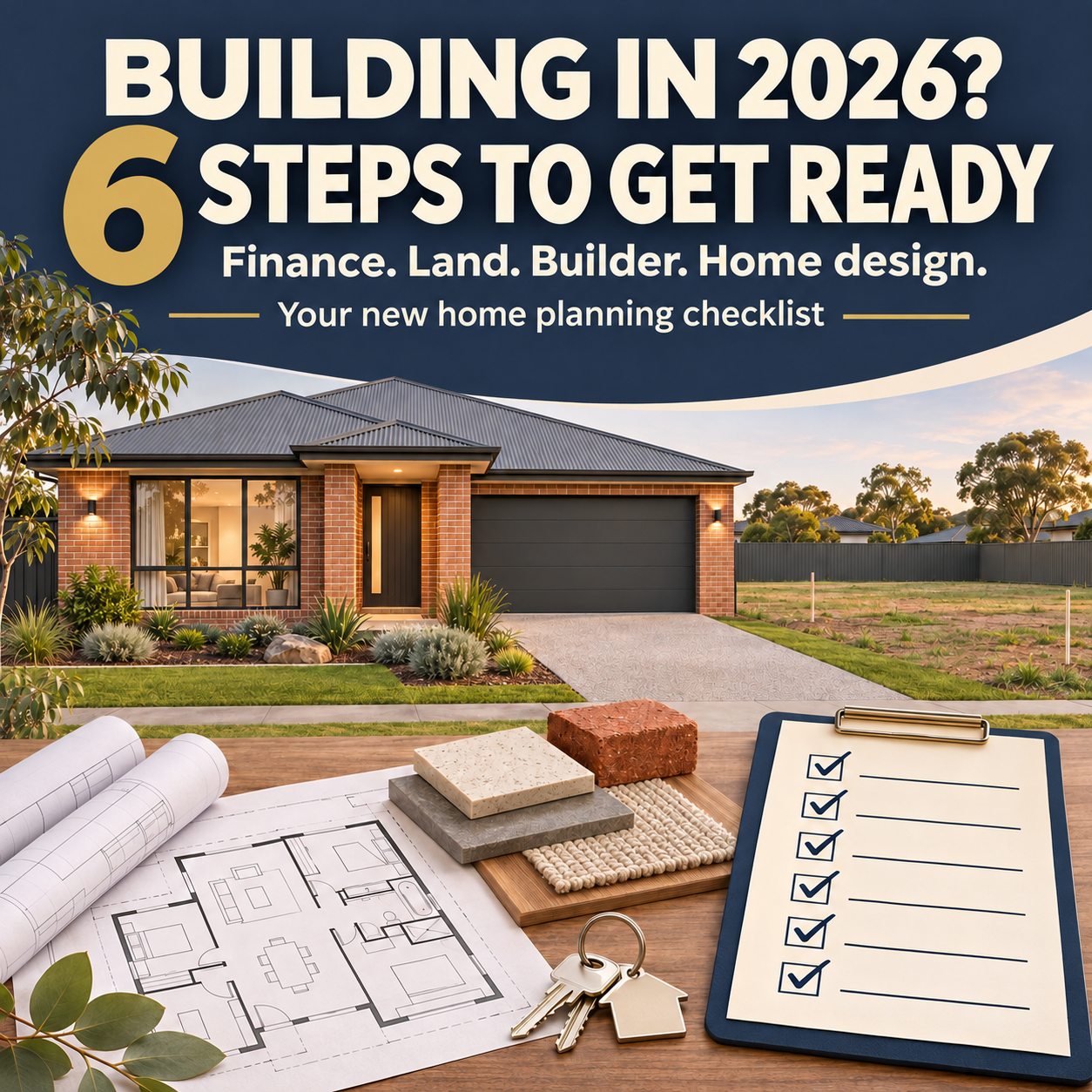
Building a Home in 2026: 6 Key Steps to Get Ready
Thinking about building a new home in 2026? Before you spend weekends visiting display homes, it helps to get clear on your budget, preferred location and what you actually need from your home.
In this episode of the Home Building Hub Podcast, Colin Bischof and Darren Brennan outline six practical steps to help buyers prepare for a new home build. Their approach brings finance, land and home design together so you can narrow your options with more confidence.
The episode was recorded ahead of Christmas 2025, looking towards 2026, and draws mainly on the hosts’ experience in Melbourne. References to market conditions, promotions and availability reflect that discussion rather than a current market update. The preparation checklist remains a useful starting point wherever you are in your building journey.
Why preparation matters before building a new home
It is easy to fall in love with a floor plan or a block of land. The challenge is making sure your preferred home, location and budget work together.
During the episode, Colin and Darren describe improving confidence, competitive builder pricing and growing competition for some Melbourne blocks in their experience at the time. Those observations are local and time-specific, rather than a guarantee of what any buyer will find today.
The practical lesson is to do your homework before making a commitment. Preparation helps you ask better questions, compare options and recognise when something suits your circumstances.
1. Get your finance ready
Start by understanding your budget before narrowing down builders or land estates.
Darren recommends booking a conversation with your mortgage broker early. In the episode’s holiday context, that also means checking when your broker returns to work so you can plan ahead.
Use that conversation to discuss:
- Your borrowing capacity and deposit position.
- Repayments you would feel comfortable managing.
- Whether home loan pre-approval is appropriate for your situation.
- How finance would work for your proposed land purchase and construction.
- What documents your broker or lender needs from you.
- Whether any home buyer assistance may be relevant, subject to current eligibility requirements.
Pre-approval can help you establish a price range, but it does not guarantee final loan approval. The lender still needs to assess your circumstances and the property before approving the loan. See Moneysmart’s guide to buying a house for more information.
The hosts also discuss government deposit assistance in the episode. Treat that discussion as a prompt to investigate your options, rather than confirmation that you qualify. Check the current rules with your broker and the relevant scheme administrator.
Your next step: Arrange a finance conversation and establish a working budget before comparing house and land options.
2. Check builder and display home opening dates
An online shortlist is a good start, but you will probably want to walk through your preferred homes and speak with consultants.
Colin and Darren point out that builders can reopen on different dates after the Christmas break. A display home you want to visit may still be closed even when another builder is back at work.
Before planning your visits, confirm:
- Display home opening hours.
- Whether you need an appointment.
- When your preferred consultant is available.
- Whether the design you want to see is on display at that location.
- Whether new displays are scheduled to open.
This is particularly useful around public holidays or shutdown periods, but the same habit helps at any time of year.
Your next step: Put confirmed opening times and appointments into a simple visit schedule.
3. Review builder promotions and compare the details
A promotion can be worth exploring, but the headline offer is only part of the comparison.
In the episode, Darren explains that the start of the year can bring new offers and display openings. Availability and terms will vary, so ask each builder what applies to your preferred design and block.
When comparing offers, look at:
- The base price and standard inclusions.
- What the promotion adds to the home.
- Any conditions, exclusions or deadlines.
- The cost of upgrades you actually want.
- Whether the advertised facade is included.
- How site costs are treated in the quote.
- The total proposed price for your circumstances.
A useful question is: “What would this home cost with the same features as the other home I’m considering?”
That gives you a more meaningful comparison than looking at the size of a discount or upgrade package alone.
Your next step: Create a comparison sheet and record the same information for every builder on your shortlist.
4. Research house and land packages and explore the area
Once you have a working budget, start exploring what it could buy in different locations.
The hosts suggest using property websites such as realestate.com.au and OpenLot to research house and land packages. These can help you see how location, block size and home size interact.
For example, a more expensive block may leave less room in your budget for the house. A different suburb may offer other combinations, but you need to weigh those against travel and lifestyle needs.
Do more than browse online. Colin recommends visiting estates, checking out local parks and shops, and getting a feel for everyday life in the area.
Consider:
- Your journey to work.
- Public transport access.
- Schools and childcare relevant to your household.
- Shops, medical services and recreation.
- What is already available nearby.
- What is proposed for future development.
- How the location could suit your changing needs.
Keep existing amenities separate from proposed ones when comparing estates. Ask questions about planned facilities rather than assuming everything shown on a master plan will be available when you move in.
Your next step: Choose a few areas to visit and write down what matters most to your household.
5. Shortlist land estates and investigate specific blocks
After your initial research, narrow the list to a small number of estates and suitable lots.
Darren suggests requesting price lists and asking about available blocks, title timing and future releases. This moves your research from general impressions to specific options.
Useful questions include:
- Which blocks are currently available?
- What are their prices and dimensions?
- Is the land titled, or what is the estimated title timeframe?
- What information is available about slope and fill?
- What estate requirements could affect the design?
- Can the builder review the lot before you commit?
One of the strongest messages in the episode is to speak with your builder before buying a block.
A block that looks suitable on a sales plan may involve design or site considerations you have not recognised. The hosts highlight fall, fill, orientation, engineering information and estate requirements as things to discuss with a knowledgeable consultant.
Titled land is not an automatic green light to begin construction. You still need to work through the relevant design, finance, approval and builder requirements for your project.
Your next step: Have your preferred builder review the shortlisted lots and explain how each could affect the home and price.
6. Narrow down your builder, home design and inclusions
The final step brings everything together: your budget, estate, block, builder and home design.
Colin explains that these decisions need to progress together. Buying land and hoping a favourite house will fit can create problems, just as choosing a home without considering the block can leave important questions unanswered.
For your final shortlist, review:
- Floor plans and how you would use each space.
- Suitability for the proposed block.
- Standard inclusions and optional upgrades.
- Facade choices and their prices.
- Site-related allowances and exclusions.
- The total proposed cost.
- Questions that still need a written answer.
A needs and wants list can help. Separate the features essential to your daily life from those you would enjoy if the budget allows.
Your next step: Bring your preferred options and outstanding questions to your consultant so you can work towards an informed decision.
Frequently Asked Questions
What should I do first when preparing to build a home?
Start with your budget and finance position. Then research locations, land and home designs together so you can identify combinations that suit your circumstances.
Should I choose my land or builder first?
Research both alongside each other. The hosts recommend speaking with a builder before committing to land so you can check whether the block suits your intended home and understand potential site considerations.
Does titled land mean I can start building immediately?
No. Title status is one part of the process. Ask your builder what else needs to be completed before your particular project can start on site.
Are builder promotions always the best value?
Compare the full proposed price, inclusions, exclusions and terms. An attractive promotion may include features you do not need, while upgrades you do want may cost extra.
Does this checklist only apply to Melbourne buyers?
The episode’s market commentary mainly relates to Melbourne. The six preparation steps can help buyers elsewhere, but local land conditions, requirements and builder arrangements need to be checked separately.
Glossary of Terms
- Borrowing capacity: The amount a lender assesses you may be able to borrow, based on its criteria and your circumstances.
- Pre-approval: A lender’s conditional indication of potential borrowing, rather than a guarantee of final approval.
- Titled land: Land with its own registered title. Title status alone does not confirm construction can begin immediately.
- Untitled land: A proposed lot whose individual title has not yet been registered.
- Site costs: Costs associated with preparing a particular block and adapting the build to its conditions. Ask what your quote includes.
- Fall: The slope or change in ground level across a block.
- Fill: Material placed on land to alter its level, which may require consideration in the engineering and building approach.
- Orientation: The direction a block or home faces and how it relates to sunlight.
- Inclusions: The features, finishes and items included in the builder’s stated price.
- Facade: The external front appearance of a home.
Key Takeaways
- Start with finance so you can research within a realistic working budget.
- Confirm display home opening dates and consultant availability before visiting.
- Compare builder promotions using total pricing and consistent inclusions.
- Explore estates in person and consider your future lifestyle needs.
- Investigate specific blocks and involve your builder before buying land.
- Bring your land, builder and home design decisions together.
- Treat the episode’s market observations as commentary from its recording period, rather than current forecasts or guarantees.
Ready to prepare for your new home build? Watch or listen to “6 Key Steps to Get Ready for Building in 2026” with Colin Bischof and Darren Brennan for the full discussion.
About the Home Building Hub Podcast
The Home Building Hub podcast, hosted by industry experts Colin Bischof and Darren Brennan, is Australia’s premier resource for new home buyers. With weekly episodes featuring special guests, the podcast provides objective, high-quality insights into the home building process - completely free and without sales pitches. From understanding financing options to navigating the complexities of building a new home, each episode is packed with actionable advice and tips. Explore more episodes at http://www.homebuildinghub.com.au and join our growing community of informed home buyers.
Disclaimer
This article was generated by AI based on a transcript of our podcast episode and may contain inaccuracies or omissions. Whilst we’re all about providing value to you, this article should not be considered as legal or financial advice. It contains general information only and is based on the content discussed during the podcast episode. This information is relevant to the episode’s release date and may not be applicable at the time of reading. Always seek independent professional advice tailored to your personal situation before making any legal or financial decisions.