
No Gas From 2027. Which States Are Impacted?
2nd February 2026
Finance & Budgeting Legal & Contracts First Home Buyer Investor News & Industry Insights
In this episode, Colin Bischof and Darren Brennan unpack Australia’s move towards all electric homes and what the “no gas from 2027” changes mean for new home buyers. They break down which states are affected, what will replace gas appliances, and how these shifts could impact build costs and design choices.
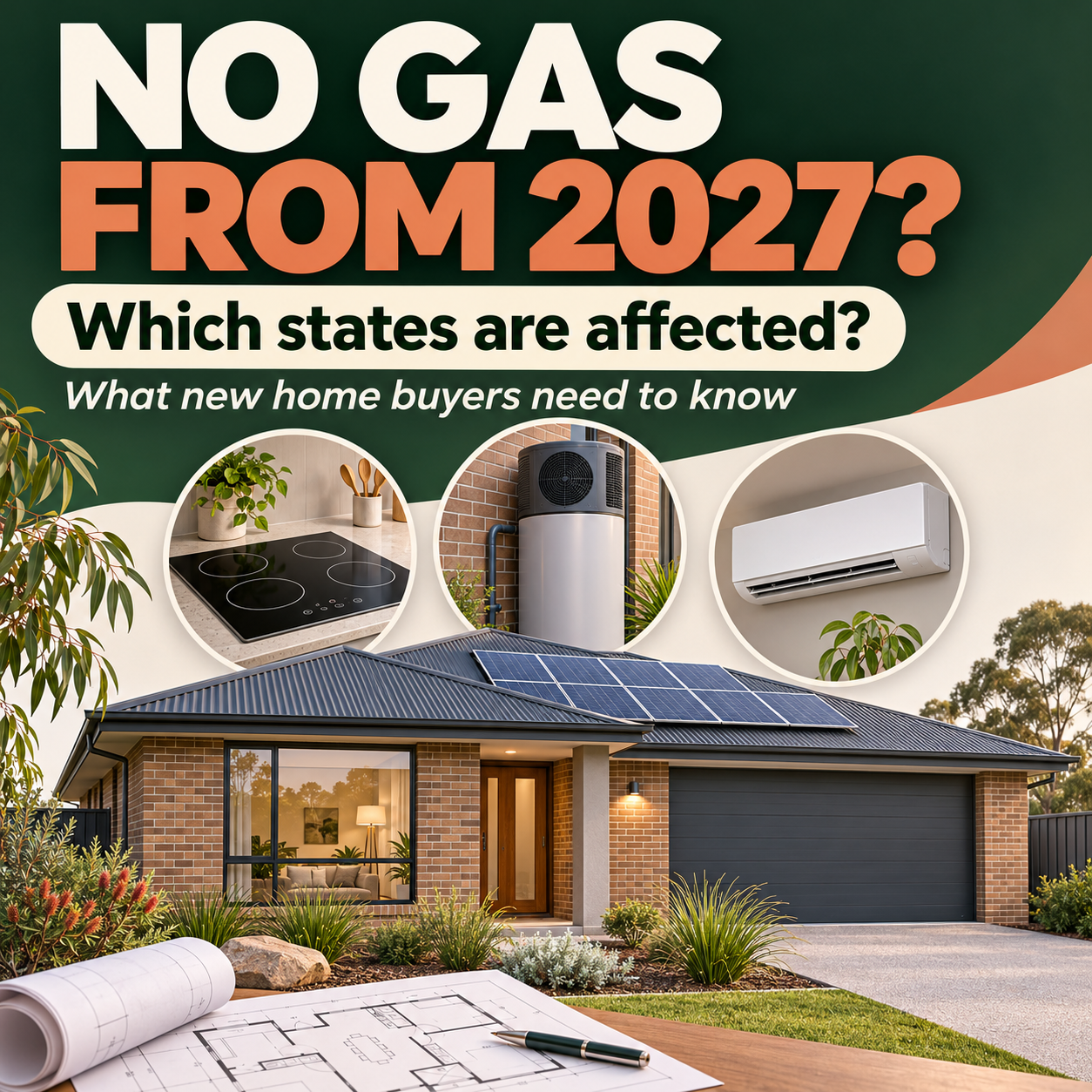
No Gas From 2027: Which Australian States Are Impacted and What Home Buyers Need to Know
The move towards all electric homes is one of the biggest shifts currently affecting new home construction in Australia. In this episode of the Home Building Hub Podcast, Colin Bischof and Darren Brennan break down what the upcoming “no gas” changes mean, which states are impacted, and how it will affect the cost and design of new homes.
For Australian home buyers, especially those planning to build in the next 12 to 24 months, understanding these changes is essential for budgeting and decision making.
What is the “No Gas From 2027” rule?
The Victorian Government is progressively moving towards all electric homes for new builds. This means gas connections in new residential properties will be phased out over time.
The key change is:
- From 1 January 2027, new residential builds in Victoria will no longer be able to connect to gas
This includes homes where gas may still physically be available in the street. Even if infrastructure exists, new homes will be required to go all electric in most cases.
The goal is to reduce emissions and support Australia’s net zero targets.
Which Australian states are impacted?
States with no immediate all electric mandate
At a national level, most states currently do not have formal “no gas for new builds” rules in place:
- New South Wales
- Queensland
- South Australia
- Western Australia
- Tasmania
- Northern Territory
However, energy efficiency rules can still vary at a local council or development level.
Victoria: leading the transition
Victoria is currently the most advanced state in the transition away from gas in residential construction.
Key points include:
- New estates are already being developed with no gas connections
- Gas use is being actively discouraged through policy and pricing
- The long-term direction is clear: all electric homes becoming standard
Why gas is being phased out
The discussion in the episode highlights a broader national direction influenced by the Australian Energy Market Commission (AEMC).
The AEMC has supported changes that:
- Increase the cost of new gas connections in some areas
- Provide clearer upfront pricing signals for energy choices
- Encourage households to consider electric alternatives
While not an outright ban nationwide, the trend is clearly toward making gas less attractive financially.
What changes in a new all electric home?
If you are building a new home under all electric requirements, you can expect the following changes.
Heating and cooling
Gas ducted heating is typically replaced with:
- Split system air conditioning
- Electric wall panel heating
- Ducted reverse cycle heating and cooling
Cooking
Gas cooktops are replaced with:
- Electric ceramic cooktops, or
- Induction cooktops (increasingly common)
Hot water
Gas hot water systems are replaced with:
- Electric heat pump systems
Ovens
- Gas ovens are replaced with electric ovens (most new homes already include this)
What does going all electric cost?
One of the most important considerations for buyers is cost.
Based on the discussion:
- Typical additional cost range: $5,000 to $15,000+
- Cost depends on builder inclusions and home design
- Upgrades may already be included in some standard packages
Costs are influenced by what is included as standard versus what is considered an upgrade.
Electricity supply considerations
When moving to all electric homes, there are additional infrastructure factors to consider.
Key considerations include:
- Whether three phase power is available to your lot
- Whether your home requires upgraded electrical capacity
- Whether your system can handle simultaneous appliance use
- Solar system size and configuration
- Battery storage readiness
Solar and energy efficiency in new homes
New homes in Australia are already required under the National Construction Code (NCC) to include solar PV systems under the “whole of home” energy efficiency framework.
Typical considerations include:
- Standard solar systems (often around 3 to 3.5kW in base inclusions)
- Upgrading to larger systems (for example 6.6kW or higher)
- Battery storage readiness for future installation
- Self-consumption versus exporting power back to the grid
Important trend: falling feed-in tariffs
Homeowners are also seeing changes in solar economics:
- Feed-in tariffs have significantly reduced over time
- Some are now as low as 1.5 cents per kWh
- Future tariffs may approach zero
This increases the value of batteries, which allow homeowners to store and use their own solar energy instead of exporting it.
What this means for buyers in Victoria
If you are building in Victoria, the transition is already influencing:
- Standard inclusions from builders
- Whether gas is still offered as an upgrade
- Overall pricing and allowances
- Design decisions early in the planning process
Some estates already have:
- No gas infrastructure at all
- Mandatory all electric designs from the outset
Contract timing and the “grey area” issue
One of the most important discussion points in the episode is timing.
A key question is:
What happens if you sign a contract before 2027 but build after the rule starts?
The answer is not fully black and white.
- A Section 10 exemption may allow gas in some cases
- Approval depends on the building surveyor’s interpretation
- Requirements may include having a signed contract and plans in progress
- Different surveyors may apply different interpretations
This creates a level of uncertainty during the transition period.
Existing homes and gas appliances
The changes also apply differently to existing homes.
From around March 2027, the rules focus on:
- Replacing gas hot water systems at end of life with electric alternatives
- Allowing replacement of existing gas cooking and heating in many cases
- Encouraging electrification through incentives and rebates
However:
- Gas appliances in existing homes are not being immediately banned across the board
- The transition is gradual rather than forced overnight
Key Takeaways
- Victoria is leading Australia’s transition to all electric new homes by 2027
- Most other states currently have no formal new-build gas bans
- New homes will shift from gas heating, cooking, and hot water to electric systems
- Expect additional build costs of around $5,000 to $15,000+
- Solar and battery systems are becoming increasingly important for energy costs
- Timing of your contract may influence whether gas is still permitted during the transition period
- Existing homes are being phased differently compared to new builds
Glossary of Terms
All electric home A home that uses electricity only for heating, cooking, and hot water, with no natural gas connection.
AEMC (Australian Energy Market Commission) The body responsible for energy market rules and policy recommendations in Australia.
Heat pump hot water system An energy efficient electric system that heats water using ambient air temperature.
Induction cooktop An electric cooktop that uses electromagnetic energy to heat cookware directly.
Three phase power A higher capacity electrical supply often required for larger homes or heavy electrical loads.
Section 10 exemption A potential planning or compliance exemption that may allow gas use under specific circumstances during regulatory transition periods.
Frequently Asked Questions (FAQ)
Will gas be completely banned in Australia?
No. Gas is not being completely banned, but its use in new residential builds is being phased out in Victoria and discouraged in other regions.
Do I need to go all electric if I build in 2026?
In Victoria, it depends on timing, estate infrastructure, and contract status. Some exemptions may apply depending on approvals.
Is all electric more expensive to run?
Electric homes can be cost efficient when combined with solar and efficient appliances, but outcomes vary based on usage and system design.
Can I still cook with gas in a new home?
In many future new builds, gas cooktops will no longer be available, with induction cooktops becoming the standard alternative.
Will solar be required in new homes?
Yes, most new homes already require solar PV systems under current energy efficiency standards.
Listen to the Full Episode
Want to hear the full discussion on how the no gas transition affects your build plans and budget?
👉 https://www.youtube.com/watch?v=Q-YzndqwnYw
About the Home Building Hub Podcast
The Home Building Hub podcast, hosted by industry experts Colin Bischof and Darren Brennan, is Australia’s premier resource for new home buyers. With weekly episodes featuring special guests, the podcast provides objective, high-quality insights into the home building process - completely free and without sales pitches. From understanding financing options to navigating the complexities of building a new home, each episode is packed with actionable advice and tips. Explore more episodes at http://www.homebuildinghub.com.au and join our growing community of informed home buyers.
Disclaimer
This article was generated by AI based on a transcript of our podcast episode and may contain inaccuracies or omissions. Whilst we’re all about providing value to you, this article should not be considered as legal or financial advice. It contains general information only and is based on the content discussed during the podcast episode. This information is relevant to the episode’s release date and may not be applicable at the time of reading. Always seek independent professional advice tailored to your personal situation before making any legal or financial decisions.