
How Long Does it Take to Get to Site?
16th February 2026
Finance & Budgeting Pre-Construction First Home Buyer Investor Design & Trends
This episode breaks down how long it really takes to get to site when building a new home in Australia. It explains the key steps and common delays that can affect your start date, from land titles and finance through to approvals and design decisions.
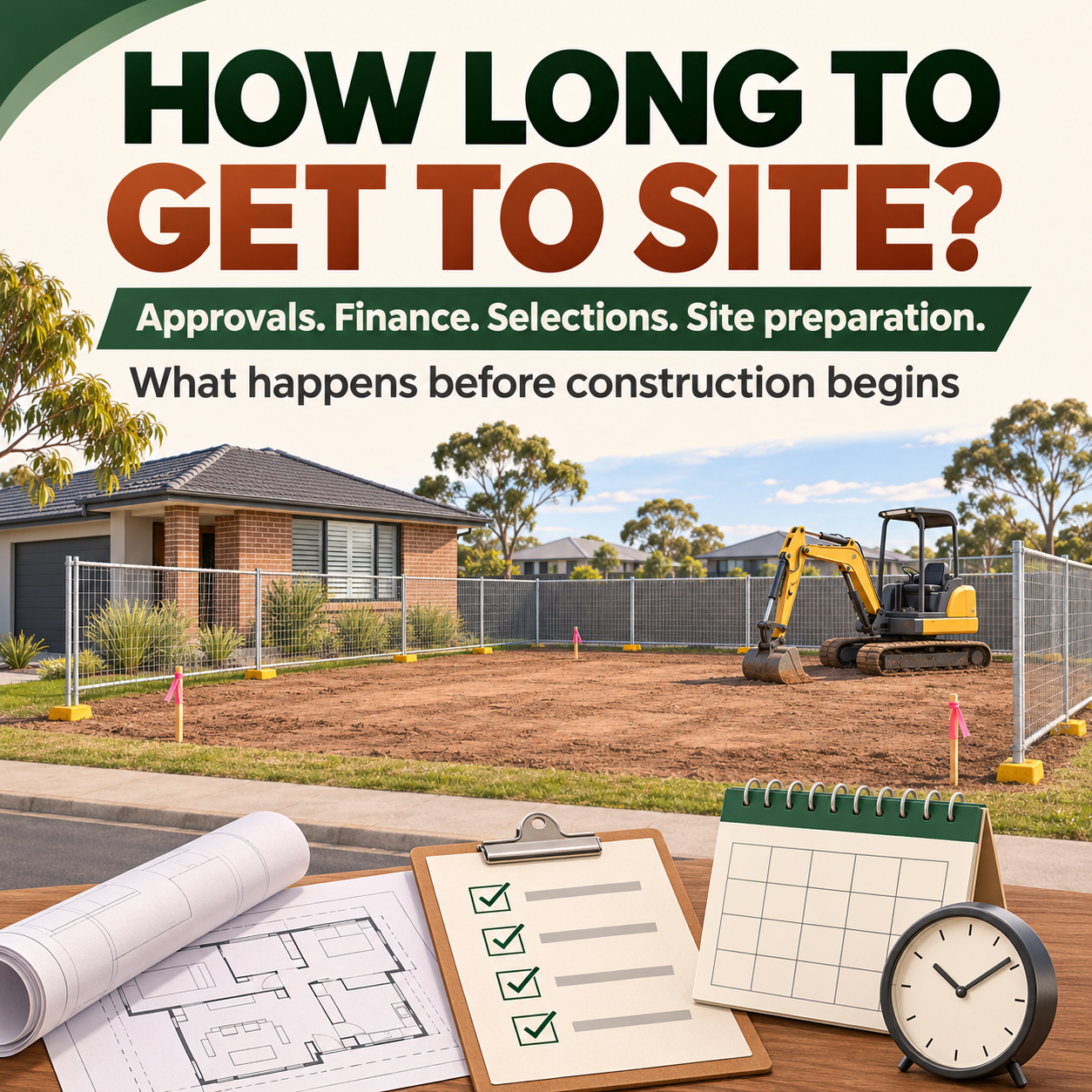
How Long Does It Take to Get to Site in New Home Construction?
If you are planning to build a new home in Australia, one of the most common questions is: how long does it take to actually get to site start?
The short answer is that it varies. The longer answer is that there are multiple steps, third parties, approvals, and decisions that all influence your timeline before construction even begins.
In this episode discussion from the Home Building Hub Podcast, hosts Colin Bischof and Darren Brennan break down exactly why this stage can take anywhere from a few weeks to several months, even when everything looks ready on paper.
Let’s unpack it in a practical way so you know what to expect.
What does “getting to site” actually mean?
One of the biggest points of confusion for new home buyers is the term “site start”.
Depending on the builder, “getting to site” can mean different things, such as:
- When your job is handed to the construction team
- When site works like fencing and temporary facilities are installed
- When excavation begins
- When the slab is poured
This lack of consistency is why buyers often feel misled about timelines.
In reality, “getting to site” generally means your project has completed all pre construction requirements and is ready for physical building works to begin.
These include:
- Finalised building contract
- Approved drawings and selections
- Finance approval
- Required permits and compliance checks
- Ordered materials and scheduling works
Key factors that affect how long it takes to get to site
1. Whether your land is titled or untitled
This is one of the biggest drivers of delay.
- Titled land means it is registered and ready for construction
- Untitled land means you must wait for registration before settlement and build can proceed
Even after title is issued, there can be delays of 4 to 8 weeks depending on portal updates and administrative processes.
2. Changes to your home design
Design changes can significantly slow things down.
If you:
- Redraw plans
- Modify layouts
- Change structural elements
You may trigger:
- Revisions and re-approvals
- Additional drafting time
- Updated pricing and contract changes
Even small adjustments can add 1 to 3 weeks or more depending on complexity.
3. Colour selection process
Colour choices are a major milestone in the pre construction phase.
There are two common approaches:
- Full colour selection appointment
- Pre-set colour boards or packages
A full selection process can add time because:
- Appointments may not be immediately available
- Decisions can be overwhelming
- Budget adjustments may be required after pricing updates
Using pre-set colour schemes can significantly speed up the process, especially for investment builds.
4. Developer design approval
Many estates require approval from a developer before construction can begin.
This may include requirements such as:
- Façade materials and design rules
- Landscaping requirements
- Driveway specifications
- Energy or sustainability requirements
Approval timeframes typically range from:
- 1 to 4 weeks, but can be longer depending on the estate
This step is outside the builder’s control, which is why it often causes frustration.
5. Planning conditions and council approvals
Some blocks of land come with additional planning requirements such as:
- Bushfire overlays
- Flood zones
- Heritage restrictions
- Council planning permits
If council approval is required, expect:
- 4 to 8 weeks minimum, often longer
- Potential multi month delays for complex builds
This is one of the most unpredictable parts of the process.
6. Finance approval delays
Your finance approval can also impact timing significantly.
Delays often occur due to:
- Missing documents from the buyer
- Bank valuation issues
- Communication delays with brokers
- Incorrect lender selection
Using a broker experienced in construction loans is critical to avoid unnecessary delays.
7. Third party reports and site preparation
Before construction starts, several technical reports must be completed:
- Soil testing
- Engineering design
- Energy ratings
- Site surveys
Delays can occur if:
- The site is overgrown
- Access is blocked
- Rubbish or contamination is present
In many cases, site cleaning must meet strict requirements, not just surface level clearing.
8. Site condition and cleanliness
Builders now require properly prepared sites before starting work.
Common issues include:
- Dumped rubbish
- Contaminated soil
- Overgrown vegetation
Proper site preparation may require mechanical scraping rather than basic cleanup, which adds time and cost but avoids bigger issues later.
Realistic timeframe to get to site
For a titled block of land with no major complications, a realistic expectation is:
10 to 16 weeks (around 2.5 to 4 months)
However, this can extend depending on:
- Design changes
- Developer approvals
- Council requirements
- Finance delays
- Site conditions
- Communication speed from all parties
Why communication matters so much
A major theme from Colin and Darren’s discussion is that delays are often caused by communication gaps.
To keep your build moving:
- Respond quickly to emails and calls
- Finalise selections promptly
- Provide documents to brokers immediately
- Clarify expectations with your builder early
Delays on your end often directly translate into delays on site start.
Key takeaways
- “Getting to site” does not mean construction has physically started
- Land title status is one of the biggest timeline drivers
- Design changes and colour selections can add weeks
- Developer and council approvals are outside builder control
- Finance delays are often caused by missing documentation or valuation issues
- A realistic pre construction timeframe is 10 to 16 weeks
- Communication speed from all parties has a major impact on timing
Glossary of terms
Titled land Land that is officially registered and ready for settlement and construction.
Developer approval Design approval required from estate developers before building can commence.
Soil test Assessment of ground conditions to determine foundation requirements.
Energy rating A compliance requirement assessing the home’s thermal efficiency.
Site start A term used differently by builders, often referring to various stages before physical construction begins.
Frequently asked questions
How long does it take to start building a house in Australia?
Typically between 10 and 16 weeks once land is titled, but this depends on approvals, finance, and design decisions.
What is the biggest cause of delay before construction starts?
Developer approvals, design changes, finance delays, and council planning requirements are the most common causes.
Can I speed up my build start time?
Yes. Fast communication, quick selection decisions, and having finance ready can significantly reduce delays.
Does untitled land delay construction?
Yes. You cannot proceed to full construction until the land is titled and settled.
Final thoughts
Getting to site is not a single step. It is a sequence of approvals, decisions, and third party processes that all need to align before construction begins.
Understanding this upfront helps set realistic expectations and avoids frustration during the early stages of your build.
Listen to the full episode
🎧 Watch or listen here: https://www.youtube.com/watch?v=niOM538XTRA
About the Home Building Hub Podcast
The Home Building Hub podcast, hosted by industry experts Colin Bischof and Darren Brennan, is Australia’s premier resource for new home buyers. With weekly episodes featuring special guests, the podcast provides objective, high-quality insights into the home building process - completely free and without sales pitches. From understanding financing options to navigating the complexities of building a new home, each episode is packed with actionable advice and tips. Explore more episodes at http://www.homebuildinghub.com.au and join our growing community of informed home buyers.
Disclaimer
This article was generated by AI based on a transcript of our podcast episode and may contain inaccuracies or omissions. Whilst we’re all about providing value to you, this article should not be considered as legal or financial advice. It contains general information only and is based on the content discussed during the podcast episode. This information is relevant to the episode’s release date and may not be applicable at the time of reading. Always seek independent professional advice tailored to your personal situation before making any legal or financial decisions.