With the War in Iran, Are We Entering COVID 2.0? What Australian Home Buyers Should Know
30th March 2026
Finance & Budgeting Legal & Contracts Pre-Construction First Home Buyer Investor News & Industry Insights
Could the Iran war affect Australian home building costs and delays? Colin and Darren discuss lessons from COVID and what buyers should ask builders.
With the War in Iran, Are We Entering COVID 2.0? What Australian Home Buyers Should Know
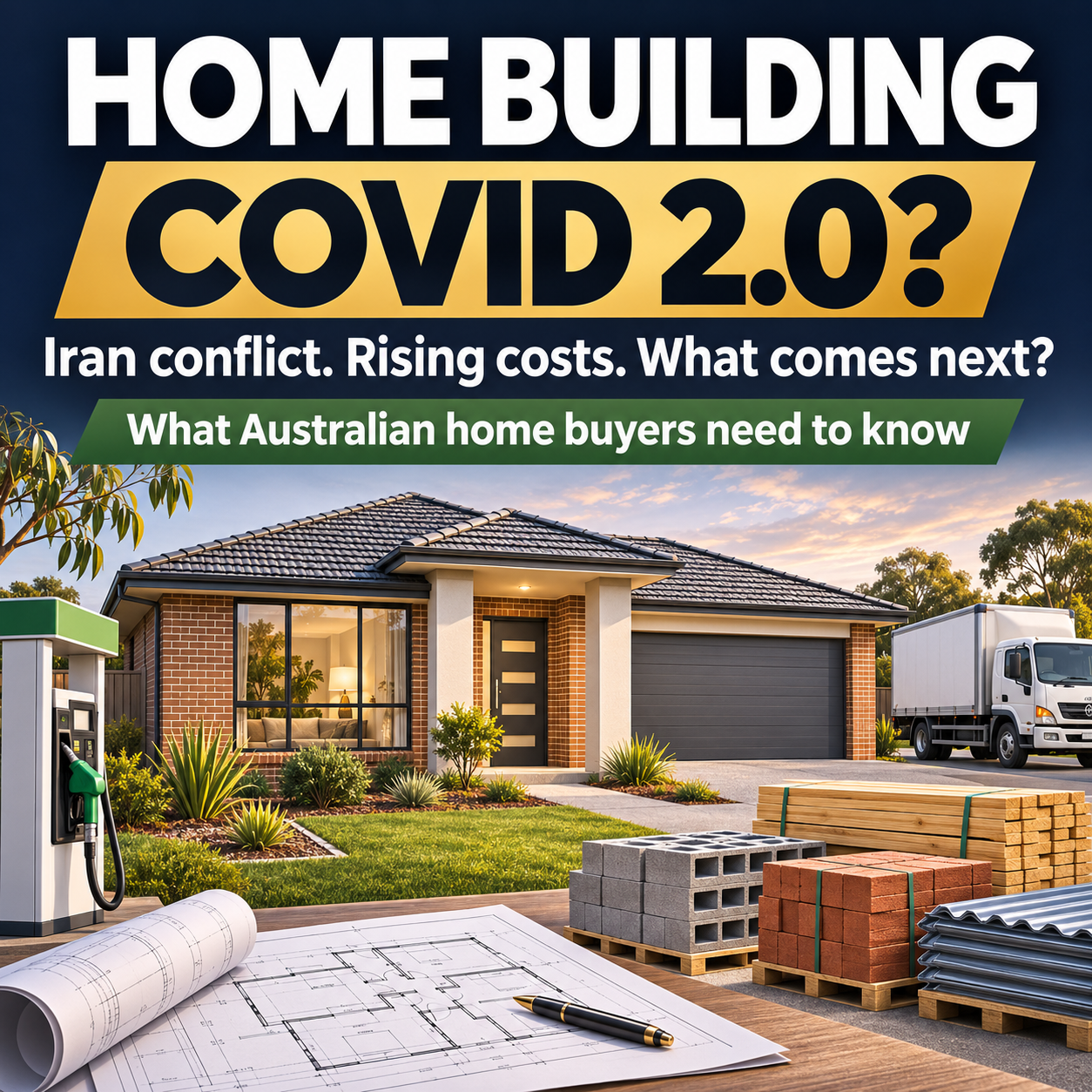
If you are building a new home or weighing up a house and land package, uncertainty overseas can make an already big decision feel even bigger. Could higher fuel prices push up construction costs? Will materials become harder to source? And could we see a repeat of the building delays experienced during COVID?
In this episode of the Home Building Hub podcast, Colin Bischof and Darren Brennan discuss how the Iran conflict could affect Australian home building, what builders may have learned from the pandemic and where buyers should focus their attention.
Their answer to the COVID 2.0 question at the time of recording was straightforward: not yet. They saw an important difference between rising costs and the widespread supply interruptions experienced during COVID.
This article reflects the hosts' observations and scenarios at the time of recording. Their estimates are not current quotes, industry-wide averages or guarantees about what happens next.
Why the Hosts Say This Is Different from COVID
During COVID, the building industry faced several pressures at once. Colin and Darren describe factory shutdowns, disrupted shipping, material shortages and restrictions on work, alongside government stimulus that encouraged demand for new homes.
In other words, builders were dealing with difficulties getting materials while more people wanted to build.
In the episode, Darren characterises the initial impact of the Iran conflict as an energy-driven cost shock. The concern was that higher fuel and production costs could make materials and services more expensive, even where products remained available.
That distinction matters:
-
A cost shock
means inputs become more expensive.
-
A supply shock
means inputs become harder to obtain, potentially interrupting work.
-
Both together
can create greater pressure on prices and construction schedules.
The hosts acknowledge that a prolonged or escalating conflict could change the picture. Their assessment was a snapshot, rather than a prediction that serious disruption could never occur.
How Higher Fuel Prices Can Affect Home Building Costs
A new home depends on a network of manufacturers, suppliers, delivery drivers and trades. Fuel costs can work their way through that network before materials arrive at your block.
The hosts discuss several possible pressure points:
- Transporting building materials to suppliers and construction sites.
- Running machinery and moving equipment.
- Manufacturing energy-intensive products.
- Producing oil-derived materials such as some plastics and PVC products.
- Trades travelling between jobs.
The broader mechanism is supported by the Reserve Bank of Australia's May 2026 analysis, which explains that higher fuel prices can affect other prices through transport and input costs, with dwelling construction relatively exposed to fuel-related costs.
However, a percentage increase in one product does not translate into the same percentage increase in the total cost of a home. A house contains many materials and services, each contributing a different share of the overall price.
What About the Cost Increases Mentioned in the Episode?
Colin reports that one builder had described additional build costs of around $2,000 to $3,000 at that point. He also discusses a possible increase towards $6,000 in the following months.
These were an individual report and a scenario discussed during the episode. They should not be used as a budget allowance for your own project.
Your costs will depend on the builder, location, design, specifications, procurement arrangements and contract. Ask for an updated, itemised assessment of your project rather than applying a podcast estimate to your quote.
Could Construction Delays Return?
Colin and Darren discuss the possibility of delays if cost pressures develop into problems obtaining materials or coordinating deliveries and trades.
At the time of recording, Colin suggests that a delay of one to three months could be a possible scenario if conditions deteriorated. He contrasts that with the much longer disruptions discussed from the COVID period.
That is a scenario, not a forecast for every Australian building project. The episode does not establish that your home will be delayed or that any delay will fall within that range.
For buyers, the useful step is to ask how the builder is managing scheduling risks:
- Have any materials for my home been identified as difficult to obtain?
- Are key products ordered, allocated or still awaiting confirmation?
- What alternatives could be considered if an item becomes unavailable?
- How will you communicate a change to the construction schedule?
- What does my contract say about extensions of time?
Also consider the practical effect of a longer build on rent, storage, temporary accommodation and moving arrangements.
What Could Change in New Home Quotes?
The hosts suggest builders may respond more cautiously when pricing future work. Possible changes discussed include:
- Higher prices for new jobs.
- Fewer discounts or promotional offers.
- Shorter price protection periods.
- More careful control over the number of projects accepted.
- Closer monitoring of supplier and trade costs.
These are potential business responses, rather than changes every builder will make.
A shorter price protection period deserves particular attention when land has not titled. Ask when the period starts, what milestones must be met and what happens if settlement, approvals or site commencement take longer than expected.
Already Signed a Building Contract? Ask for Written Clarity
Colin and Darren express the view that many builders would try to absorb manageable increases on existing work. Colin also describes seeing a builder reassure customers about contracted prices.
That does not establish what your builder must do or what your contract permits.
Consumer Affairs Victoria's guidance explains that builders must factor likely inflation and wage increases into contract pricing. The treatment of a particular price change still requires consideration of the contract and applicable law. Buyers elsewhere should consult their own state or territory's consumer building guidance.
If your builder raises a price or timing issue, ask for:
- A written explanation of the proposed change.
- An itemised breakdown of the amount involved.
- The contract provision they are relying on.
- Any effect on the completion date.
- Independent advice before agreeing to something you do not understand.
Keep the conversation specific to your project. A general industry headline cannot explain the position under your individual contract.
Why the Cheapest Builder May Not Offer the Best Value
One of the episode's strongest messages is to look beyond the lowest advertised price.
Colin emphasises certainty around pricing, timing, procurement and communication. An attractive starting figure is only one part of the decision.
When comparing builders, consider:
- How complete and transparent the quote is.
- Which inclusions, exclusions and allowances apply.
- Whether site costs have been adequately investigated.
- The conditions attached to price protection.
- How the builder manages suppliers and trades.
- How clearly they explain risks and respond to questions.
A useful comparison looks at the total expected project cost and the conditions attached to it. Two quotes can appear similar while allowing for very different scopes of work.
Could There Be Opportunities in the Land Market?
The hosts discuss the possibility that some buyers may be unable or unwilling to proceed with land purchases, potentially creating opportunities through resales, nominations or developer incentives.
They suggest that a lower land purchase price might help offset higher construction costs in some circumstances. That is a possibility to investigate, rather than an assured saving or investment outcome.
Before treating a discounted block as a bargain, check:
- Comparable land prices in the same area.
- Title status and settlement timing.
- Site conditions, slope and likely site works.
- Estate requirements and design restrictions.
- Whether your preferred home fits the block.
- The full cost of land, construction and associated expenses.
Do not assume an existing purchaser can simply hand back a contract, or that a nomination automatically releases them from their obligations. Obtain independent conveyancing or legal advice about the proposed transaction.
Should You Build Now or Wait?
The episode recognises that buyers are in different positions. Some households may need to pause while managing everyday expenses. Others may have the financial capacity to investigate opportunities.
Rather than trying to predict the perfect buying moment, work through the questions that affect your own decision:
- Is the full project affordable, including costs outside the advertised package?
- Do you have a contingency for unexpected expenses?
- Could your household manage a longer construction period?
- Have you reviewed your finance position with your lender or broker?
- Are you comfortable with the builder, documentation and proposed timeline?
Waiting does not guarantee a cheaper home, and proceeding does not guarantee a better outcome. The aim is to make an informed decision that your household can sustain.
Frequently Asked Questions
Is the Iran war causing another COVID-style building crisis?
At the time of recording, Colin and Darren did not consider the situation equivalent to COVID. They distinguished an initial energy and cost shock from widespread shutdowns and material shortages, while acknowledging that conditions could change.
Will my builder increase my contract price?
The episode cannot answer that for an individual project. The hosts expected many builders to support existing customers, but your position depends on your contract and applicable law. Request written details and independent advice if a price increase is proposed.
Should I budget for the dollar increases mentioned in the podcast?
No. The figures were observations and scenarios discussed at the time. Obtain project-specific cost information and discuss an appropriate contingency for your circumstances.
Could cheaper land offset higher building costs?
Possibly, but only a full project assessment can show whether there is a saving. Site works, settlement conditions and construction requirements can change the overall result.
What should I prioritise when choosing a builder?
The hosts emphasise pricing clarity, realistic timing, reliable communication and an understanding of how the builder manages procurement and trades, alongside the total price.
Glossary of Terms
-
Cost shock:
A sudden increase in the cost of inputs such as fuel, materials or labour.
-
Supply shock:
A disruption that reduces the availability of goods or services.
-
Fuel levy:
A surcharge introduced to recover additional fuel-related costs.
-
PVC:
Polyvinyl chloride, a plastic used in products including some building pipes and fittings.
-
Price protection period:
The period during which a builder offers to hold a price, subject to stated conditions.
-
Contingency:
Money set aside for unexpected project expenses.
-
Procurement:
The process of sourcing and arranging materials and services.
-
Land nomination:
An arrangement involving a substitute or additional purchaser under a land contract, subject to its terms and applicable requirements.
Further Reading
These resources provide context beyond the episode. They do not verify the hosts' individual builder reports or forecast scenarios.
Key Takeaways
- At the time of recording, the hosts saw rising energy and input costs as the immediate concern, rather than a repeat of COVID's widespread shutdowns.
- The episode's cost estimates and delay scenarios are not current quotes or industry-wide forecasts.
- Ask your builder for clear information about pricing, procurement, price protection and timing.
- Compare the complete scope and conditions of quotes, alongside the headline price.
- Investigate land opportunities using the full project cost, rather than the discount alone.
- Base your decision to proceed or pause on your household's finances and circumstances.
Watch or Listen to the Full Episode
Want to hear Colin and Darren's discussion in full? Watch or listen to With The War In Iran, Are We Entering Covid 2.0? on YouTube.
About the Home Building Hub Podcast
About the Home Building Hub Podcast: The Home Building Hub podcast, hosted by industry experts Colin Bischof and Darren Brennan, is Australia’s premier resource for new home buyers. With weekly episodes featuring special guests, the podcast provides objective, high-quality insights into the home building process - completely free and without sales pitches. From understanding financing options to navigating the complexities of building a new home, each episode is packed with actionable advice and tips. Explore more episodes at http://www.homebuildinghub.com.au and join our growing community of informed home buyers.
Disclaimer
Disclaimer: This article was generated by AI based on a transcript of our podcast episode and may contain inaccuracies or omissions. Whilst we’re all about providing value to you, this article should not be considered as legal or financial advice. It contains general information only and is based on the content discussed during the podcast episode. This information is relevant to the episode’s release date and may not be applicable at the time of reading. Always seek independent professional advice tailored to your personal situation before making any legal or financial decisions.