
Future‑Proofing Your Home for growing families, aging and long term use
13th April 2026
Finance & Budgeting Pre-Construction Design & Trends First Home Buyer Investor Sustainability & Energy Efficiency
Planning your new home build? In this episode, Colin Bischof and Darren Brennan break down practical ways to future-proof your home for growing families, ageing and long-term living. From smart design choices to low-cost upgrades, learn how to create a home that adapts with you while saving money and stress down the track.
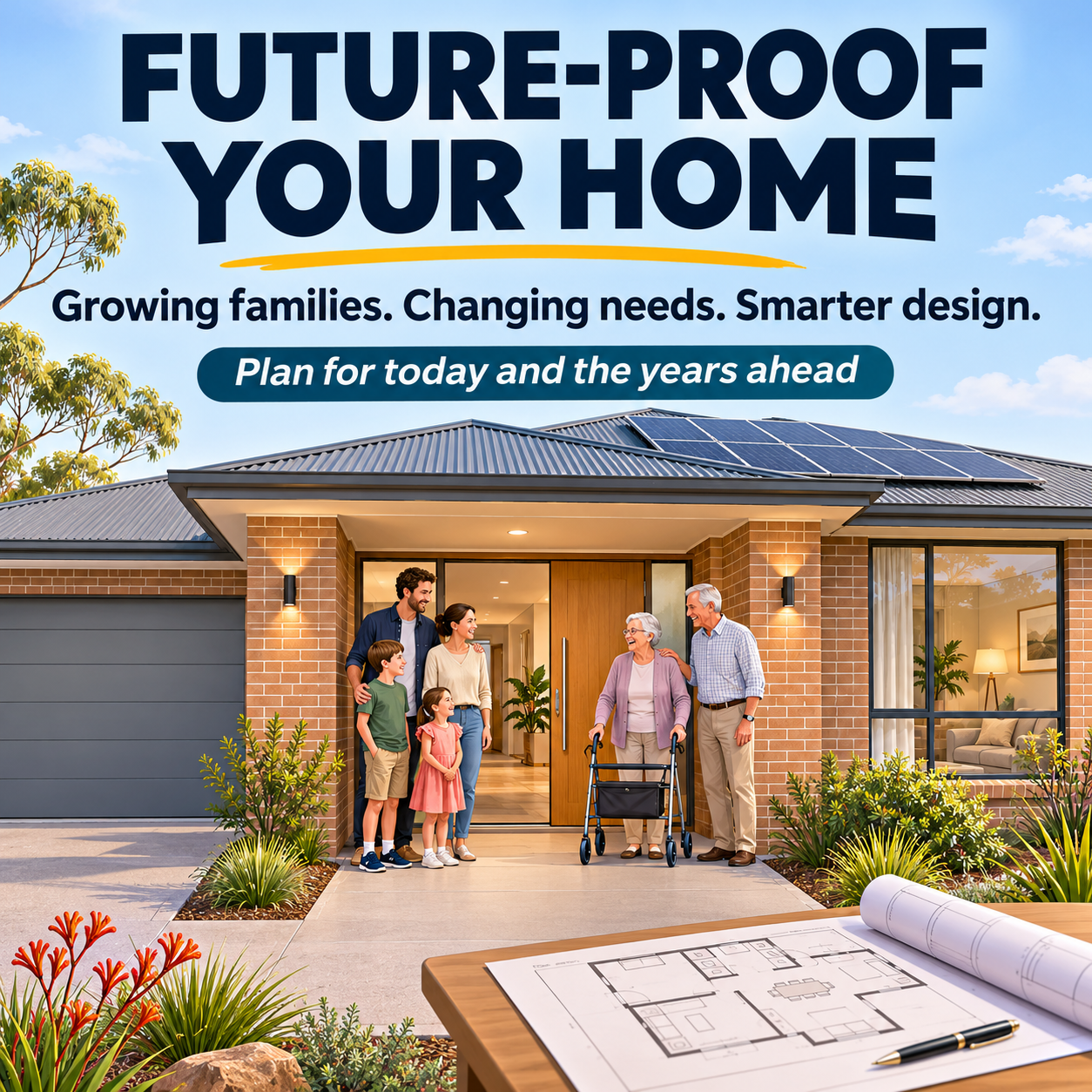
Future-Proofing Your Home for Growing Families, Ageing and Long-Term Use
Planning a new home build is exciting - but it’s also one of the best opportunities you’ll ever have to think ahead. Future-proofing isn’t about overbuilding or blowing your budget. It’s about making smart, low-cost decisions now that can save you time, money and stress later.
In this episode of the Home Building Hub podcast, Colin Bischof and Darren Brennan walk through practical ways to design a home that adapts with you - whether that’s a growing family, changing mobility, or evolving lifestyle needs.
Why Future-Proofing Matters
Future-proofing your home means designing with flexibility, accessibility and longevity in mind.
Benefits include:
- Avoiding costly renovations later
- Improving day-to-day comfort and usability
- Supporting ageing in place
- Increasing resale appeal
- Reducing long-term maintenance costs
Even small design tweaks can make a big difference over time.
Accessibility and Mobility - Plan for Life Changes
Mobility needs can change at any stage of life - whether due to ageing, injury or family circumstances.
Key ideas to consider:
- Wider doorways (820 mm minimum - ideally 920 mm)
- Wider hallways (around 1.2 m) for easier movement
- Step-free entry points and flush thresholds
- Ramps to outdoor areas like alfresco spaces
- Reinforced bathroom walls for future grab rails
- Step-free showers
- Adjustable or customised bench heights
Pro tip: Even if these features aren’t needed now, installing structural provisions (like wall noggins for grab rails) is inexpensive during construction but costly to retrofit later.
Real-world example: A ground floor bedroom with an accessible ensuite can become invaluable if a family member needs care in the future.
Flexible Spaces - Design Rooms That Evolve
Your home should adapt as your lifestyle changes.
Smart ways to create flexibility:
- Multi-purpose rooms (guest room + study)
- Bedrooms that double as home offices
- Open living areas with optional partitions
- Double cavity sliding doors for adaptable spaces
- Two-way bathrooms (shared ensuite functionality)
- Walk-in robes used as storage or workspace
Why this matters:
- Adds functional versatility
- Increases property value
- Broadens buyer appeal at resale
Simple upgrade idea:
- Add extra power points and data points to rooms you may use differently later
Energy Efficiency and Sustainability - Save Long Term
Energy-efficient homes aren’t just better for the environment - they reduce your ongoing costs.
Consider these upgrades:
- High-performance insulation (beyond minimum standards)
- Double-glazed windows
- Solar systems that are battery-ready
- LED lighting throughout
- Zoned heating and cooling systems
- Passive design (orientation of living areas to north and east)
- Eaves or shading for summer heat control
Bonus tip:
- Pre-plan for EV charging even if you don’t own an electric vehicle yet
Maintenance and Durability - Build Smarter, Not Harder
Choosing the right materials can significantly reduce upkeep and repair costs.
Low-maintenance choices include:
- Brick instead of high-maintenance cladding
- Composite decking instead of natural timber
- Durable roofing materials like Colorbond
- Scratch-resistant flooring (tiles, engineered timber)
Landscaping matters more than you think:
- Plan retaining walls upfront
- Ensure proper drainage and levels
- Think about how outdoor spaces will be used
Often overlooked details:
- Extra outdoor taps for irrigation
- Hot water connections outside
- Practical placement of utilities
Technology and Smart Home Integration
Technology is evolving rapidly - and your home should be ready for it.
Future-ready tech considerations:
- Pre-wiring for smart lighting and automation
- Security systems and cameras
- Home theatre and audiovisual wiring
- Conduits for future cabling upgrades
- EV charging infrastructure
- Energy monitoring systems
Why pre-wiring is critical:
- Avoids costly wall damage later
- Makes upgrades quick and affordable
Practical Tips You Can Apply Right Now
- Spend a little more upfront to save thousands later
- Think 5, 10 and 20 years ahead - not just today
- Ask your builder about future provisions, not just current inclusions
- Prioritise flexibility over fixed design
Key Takeaways
- Future-proofing is about planning ahead, not overspending
- Accessibility features benefit more people than you think
- Flexible spaces increase usability and resale value
- Energy efficiency reduces long-term costs
- Durable materials minimise maintenance headaches
- Pre-wiring and smart tech planning saves major retrofit costs
Glossary of Terms
Future-proofing: Designing a home to remain functional and adaptable over time
Passive design: Using natural light, airflow and orientation to improve comfort and efficiency
Double glazing: Windows with two panes of glass for insulation and noise reduction
Noggins: Structural supports inside walls used to install fixtures like grab rails
Zoned heating/cooling: Systems that allow temperature control in different areas of the home
Conduit: A pipe or channel used to run electrical wiring
Frequently Asked Questions
Is future-proofing expensive? Not necessarily. Many features are low cost during construction but expensive to add later.
Do I need accessibility features if I’m young? It’s worth considering. Life changes quickly, and these features can also improve resale value.
What’s the easiest way to future-proof my home? Focus on layout, wiring provisions and flexible spaces.
Should I invest in smart home tech now? At minimum, install the wiring or conduit so you can upgrade later.
Does future-proofing increase resale value? Yes - homes that are adaptable and efficient appeal to a broader market.
Watch or Listen to the Episode
Ready to dive deeper into these ideas?
👉 https://youtu.be/HD7dWBaTqFw
About the Home Building Hub Podcast
The Home Building Hub podcast, hosted by industry experts Colin Bischof and Darren Brennan, is Australia’s premier resource for new home buyers. With weekly episodes featuring special guests, the podcast provides objective, high-quality insights into the home building process - completely free and without sales pitches. From understanding financing options to navigating the complexities of building a new home, each episode is packed with actionable advice and tips. Explore more episodes at http://www.homebuildinghub.com.au and join our growing community of informed home buyers.
Disclaimer
This article was generated by AI based on a transcript of our podcast episode and may contain inaccuracies or omissions. Whilst we’re all about providing value to you, this article should not be considered as legal or financial advice. It contains general information only and is based on the content discussed during the podcast episode. This information is relevant to the episode’s release date and may not be applicable at the time of reading. Always seek independent professional advice tailored to your personal situation before making any legal or financial decisions.