
Estate Covenants and Design Guidelines Explained
24th July 2023
Finance & Budgeting Pre-Construction First Home Buyer Investor Legal & Contracts
Buying land in an Australian housing estate? Learn how estate covenants and design guidelines can affect your floor plan, façade and total build cost.
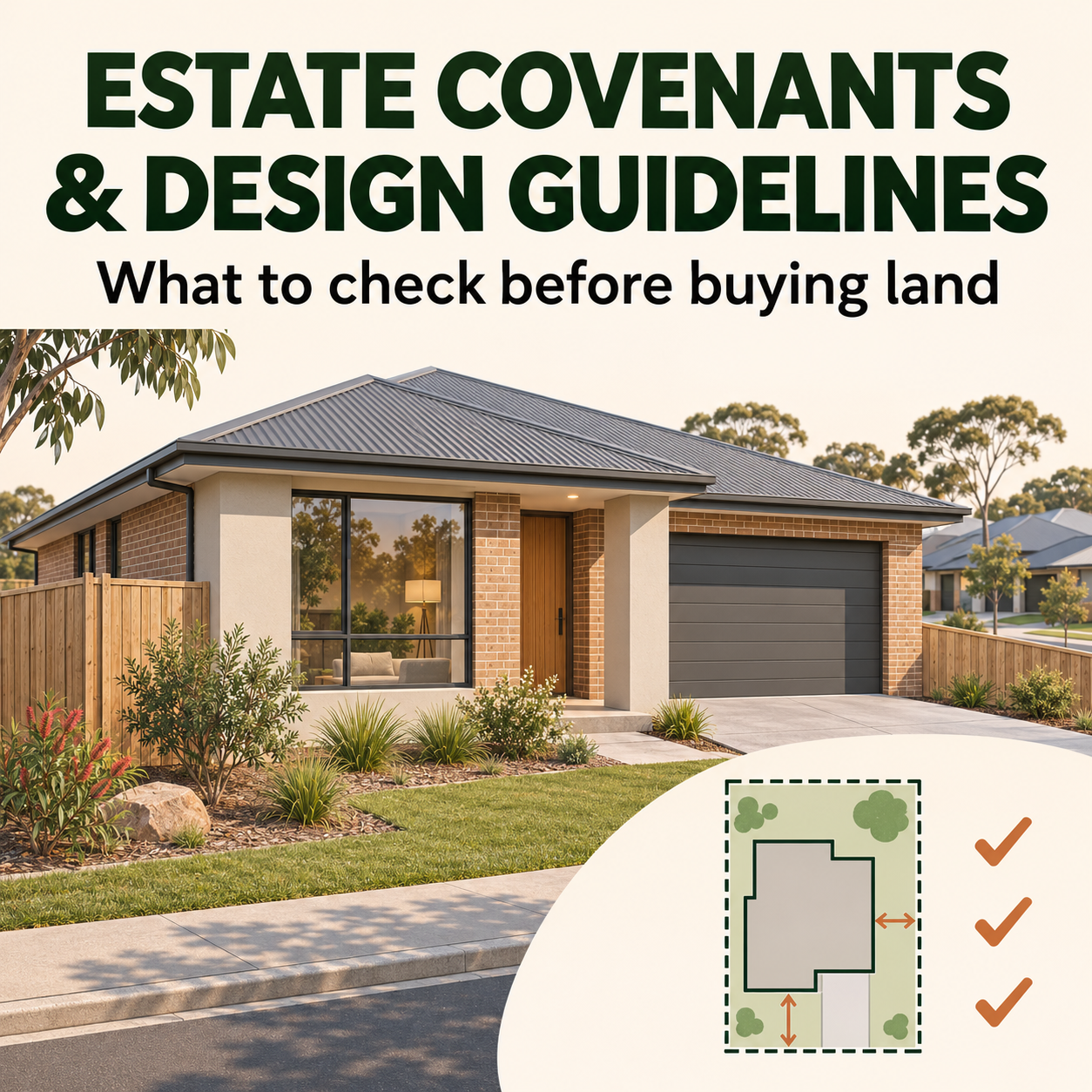
Estate covenants and design guidelines - what to check before buying land
Found a block you like and a floor plan that looks like it will fit? Before you commit, ask your builder to check that specific design against the estate guidelines and any restrictions on the lot. A side setback can affect the width of your home, an eave requirement can change your preferred façade, and a specified driveway finish can add to your budget.
In the Home Building Hub episode What are Estate Covenants and Guidelines?, Colin Bischof and Darren Brennan explain what these requirements can cover and how to spot changes that could affect your design or quote.
What is the difference between estate covenants and design guidelines?
Estate design guidelines set out the developer’s requirements for homes in an estate. They can cover everything from the look of your front façade to the type of fence you install. Developers use them to shape the streetscape, and some requirements can reflect local planning or sustainability conditions.
A restrictive covenant limits how land can be used or developed. In Victoria, a registered restrictive covenant runs with the land and can bind future owners. The hosts use terms such as “covenants”, “estate requirements” and “design guidelines” conversationally. When reviewing a block, ask your conveyancer or solicitor to check how each requirement applies to that lot and whether it has an expiry date. Planning Victoria’s guide to restrictive covenants
What can estate guidelines require?
The requirements vary by estate and lot. Here are common examples discussed in the episode.
-
Setbacks and building envelopes.
A minimum distance from the front or side boundary can affect whether your floor plan fits, especially on a narrow block.
-
Roof design.
The guidelines may specify the roof pitch, eave depth, roofing material or acceptable colours.
-
Façade and materials.
You may need a minimum porch size, particular window styles or a mix of materials such as brick, render and cladding.
-
Garage and driveway.
Check how far back the garage must sit, how wide it can be and which door styles are allowed. Some estates specify coloured concrete or exposed aggregate for the driveway.
-
Sustainability and services.
Check for requirements such as a rainwater tank, recycled water connection, solar panels or provision for the estate’s internet network.
-
Fencing, landscaping and street frontage.
The guidelines may specify fence materials, planting or where you can keep items such as bins or a caravan. If fencing and landscaping sit outside the building contract, allow for those costs separately.
How can estate requirements affect your build cost?
A builder’s base price reflects its standard design and inclusions. Some estate requirements may already be covered by the façade or specification you’ve chosen. Others, such as a steeper roof pitch or a floor plan change to fit a tighter setback, may need to be drawn and priced for your lot.
If you’re comparing two blocks or house and land packages, ask each builder to break down the quote in writing.
-
Included items.
Which estate requirements does the quoted design already meet?
-
Priced changes.
How much has the builder allowed for each required upgrade or design change?
-
Items awaiting confirmation.
What still needs drawings, pricing or estate approval?
-
Work outside the building contract.
Who is organising and paying for fencing, landscaping and the driveway?
That breakdown makes it easier to compare the cost of the home you can actually build on each block.
What should you check before signing a land contract?
-
Get the guidelines for your lot and stage.
Ask the land agent for the version that applies to the specific block and have them walk you through the main requirements.
-
Review the land documents.
Ask your conveyancer or solicitor to review the contract, title and plan of subdivision, along with any referenced documents such as a memorandum of common provisions (MCP). The subdivision plan shows the lot boundaries and may identify restrictions. An MCP may contain details such as setbacks, building envelopes and height limits.
-
Give your builder the lot documents and your preferred design.
Ask them to check the floor plan and façade together. For example, a narrow lot might look wide enough on paper until a side setback reduces the space available for the home.
-
Confirm who checks the plans.
Ask whether the developer or a design reviewer needs to approve the drawings and who will lodge them. Check separately with your builder or building surveyor which statutory approvals are required.
Glossary of terms
-
Building envelope
- The area within a lot where a building may be positioned, subject to the applicable limits.
-
Eaves
- The part of a roof that overhangs an exterior wall.
-
Façade
- The exterior face of a building, often referring to the front of the home.
-
Memorandum of common provisions (MCP)
- A document that can set out provisions referred to in land documents, such as building envelope controls.
-
Plan of subdivision
- A plan showing how land is divided into lots. It can help identify lot boundaries, dimensions and recorded restrictions.
-
Setback
- The required distance between part of a building and a boundary or other specified line.
Frequently asked questions
Do estate guidelines still apply to a resale block?
They can. Ask your conveyancer or solicitor to check the current title, contract and any relevant estate documents. In Victoria, registered restrictive covenants can continue to apply when land changes hands. Some have a lapse date, so check the wording for your lot. Planning Victoria’s guide to restrictive covenants
Can I use a standard floor plan in an estate?
Yes, if the design meets the requirements for your lot. Ask your builder to check the footprint, garage position and façade together. A standard plan may fit the block while still needing a different façade or roof design.
Are estate requirements included in a house and land package?
It depends on the quote. Ask the builder to identify which requirements are included, which are still being priced and which items you’ll need to arrange yourself.
Key Takeaways
- Check the requirements for the exact lot and stage before committing to a block or home design.
- Give your builder the estate guidelines and relevant land documents so they can check the floor plan and façade.
- Ask for an itemised quote that separates included work, required changes and items you’ll pay for separately.
- Have your conveyancer or solicitor confirm which restrictions apply, especially if you’re buying a resale block.
Watch or listen to What are Estate Covenants and Guidelines? with Colin Bischof and Darren Brennan
About the Home Building Hub Podcast: The Home Building Hub podcast, hosted by industry experts Colin Bischof and Darren Brennan, is Australia’s premier resource for new home buyers. With weekly episodes featuring special guests, the podcast provides objective, high-quality insights into the home building process - completely free and without sales pitches. From understanding financing options to navigating the complexities of building a new home, each episode is packed with actionable advice and tips. Explore more episodes at http://www.homebuildinghub.com.au and join our growing community of informed home buyers.
Disclaimer: This article was generated by AI based on a transcript of our podcast episode and may contain inaccuracies or omissions. Whilst we’re all about providing value to you, this article should not be considered as legal or financial advice. It contains general information only and is based on the content discussed during the podcast episode. This information is relevant to the episode’s release date and may not be applicable at the time of reading. Always seek independent professional advice tailored to your personal situation before making any legal or financial decisions.