7-Star Energy Ratings and Livable Housing Explained
24th April 2023
Finance & Budgeting Pre-Construction Design & Trends First Home Buyer Investor Smart Home & Tech
Building a new home in Australia? Learn how 7-star energy ratings and livable housing standards can affect your floor plan, block choice and building quote.
7-Star Energy Ratings and Livable Housing - What They Mean for Your New Home
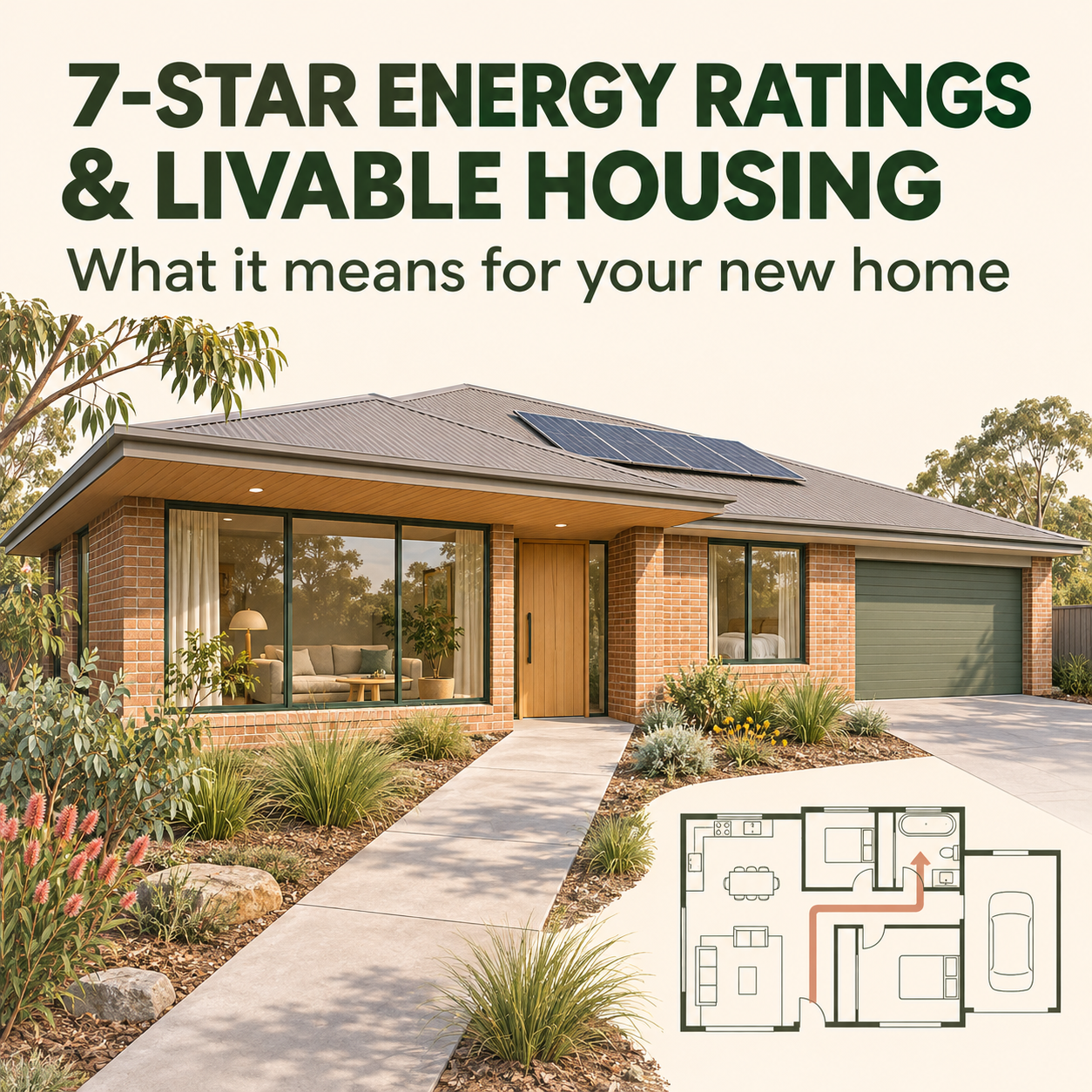
You’ve found a floor plan you like and a block that looks wide enough. But which way will the living room face? Is there room for a step-free entry? And does the quote include the glazing and insulation shown in the energy assessment? Those details can affect both the layout and the price of your new home.
In the 2023 Home Building Hub episode Here’s why pricing will go up & designs will change in 2023, Colin Bischof and Darren Brennan discussed how two changes in the National Construction Code (NCC) could affect Australian home buyers. One focused on energy efficiency. The other focused on making homes easier to enter, move around in and adapt over time.
Victoria timing update. The hosts discussed a proposed October 2023 start. Victoria’s NCC 2022 energy efficiency and livable housing provisions commenced on 1 May 2024. Check with your builder or building surveyor about the requirements that apply to your location and project. Building and Plumbing Commission - NCC 2022
What does a 7-star energy rating mean for a new home?
Under the Nationwide House Energy Rating Scheme (NatHERS), the star rating describes the home’s thermal performance. A higher rating means the design is modelled to need less energy for heating and cooling. The Whole of Home energy assessment separately considers energy use from fixed equipment such as heating and cooling systems, hot water, lighting and pool or spa pumps. Rooftop solar can help offset that energy use. Victorian Government - 7-star energy efficiency building standards
Darren explained that builders can combine several design choices to improve thermal performance:
- Orientation and shading. The direction your living areas and windows face affects when they receive sun. Eaves, nearby buildings and other sources of shade also matter.
- Window size, placement and glazing. A builder might specify double glazing or low-emissivity glass where it makes a difference to the design.
- Insulation. The design may call for changes to ceiling, wall or floor insulation, depending on the house and site.
If you’re comparing building quotes, ask which windows and insulation specifications are included. A floor plan you’ve seen at a display village can need different specifications when it’s assessed on your block.
What is livable housing design?
Livable housing design makes everyday spaces easier to use as people’s mobility needs change. Darren recalled how his family installed a ramp in the garage after his father began using a wheelchair. Even with the ramp, the ensuite was too small for him to use. That experience shows why it helps to think about the route from the entrance to the bathroom while the home is still on paper.
Features covered in the episode include:
- A step-free entrance and an access path to it, subject to applicable site provisions.
- Clear openings at specified doorways and space to move through corridors.
- Clear space around a toilet and a step-free shower.
- Reinforcement in specified bathroom and toilet walls so grab rails can be fitted later.
Ask your builder to show these features on the plan, including which entrance and bathroom the design uses. If someone in your household has specific access needs, discuss the clearances and layout they need for everyday use. Building and Plumbing Commission - Livable Housing Design Standards guide
How can the changes affect floor plans and building costs?
Colin pointed out that wider corridors, larger door openings and extra space around a toilet can take up room in a compact design. On a narrow block, that could mean reshaping a bedroom, moving a wall or choosing a different layout. If you need a particular number of bedrooms, check their usable dimensions on the revised plan. A room can still have the same label on the drawing even after its dimensions change.
The hosts also expected some builds to cost more because of changes to specifications such as glazing or insulation and the work involved in revising designs. Their figures were rough estimates from 2023. For your own budget, ask for an itemised quote based on your chosen plan, orientation and block. When comparing builders, check that both quotes cover the same specifications and identify any allowances separately.
What to ask before buying a block of land
Show your preferred builder the lot plan and the house design you have in mind. A design that works well on one side of the street can perform differently across the road because of the way the lot faces.
- Where will the main living areas face, and what could shade them?
- Can the floor plan fit the block and retain the bedrooms and living space you need?
- Where is the step-free entry shown, and how does it work with the slope of the block?
- Which glazing, insulation and fixed appliances are included in the quote?
- Has the builder priced the design for this specific lot, or are any items still allowances?
Glossary
- NatHERS - Nationwide House Energy Rating Scheme. Its star rating estimates how much heating and cooling a home design needs.
- Whole of Home assessment - An assessment that also looks at energy use from fixed equipment and the contribution of on-site generation such as rooftop solar.
- Orientation - The direction the home, its rooms and its windows face on the block.
- Low-emissivity glazing (low-E glass) - Glass with a coating that helps limit heat transfer through the window.
- Clear opening - The usable space you can pass through when a door is open.
Frequently asked questions
Does a 7-star home need double glazing on every window?
The glazing specification depends on how the design performs as a whole. Orientation, window size, shading and insulation all play a part. Ask which windows need higher-performing glazing in your design and whether those windows are included in the quote.
Will a 7-star rating tell me what my power bill will be?
The star rating estimates heating and cooling needs based on the home’s design. Your actual bill also depends on factors such as how you use your appliances, how often you heat or cool the home and the rates you pay for energy.
Can I use the same floor plan on any block?
Ask your builder to assess the plan on the specific block. Lot width, slope, orientation and nearby shading can change how the design fits and performs. If space is tight, ask to see the revised room dimensions before choosing a plan.
Key Takeaways
- A 7-star NatHERS rating focuses on thermal performance. The Whole of Home assessment also considers energy use from fixed equipment.
- Livable housing features can change the layout of entrances, corridors and bathrooms, especially on narrow blocks.
- Ask your builder to assess your preferred plan on the actual block and explain any design or specification changes in writing.
- Compare itemised quotes for your site and confirm which building requirements apply to your project.
Watch or listen to the full Home Building Hub episode on YouTube
About the Home Building Hub Podcast: The Home Building Hub podcast, hosted by industry experts Colin Bischof and Darren Brennan, is Australia’s premier resource for new home buyers. With weekly episodes featuring special guests, the podcast provides objective, high-quality insights into the home building process - completely free and without sales pitches. From understanding financing options to navigating the complexities of building a new home, each episode is packed with actionable advice and tips. Explore more episodes at http://www.homebuildinghub.com.au and join our growing community of informed home buyers.
Disclaimer: This article was generated by AI based on a transcript of our podcast episode and may contain inaccuracies or omissions. Whilst we’re all about providing value to you, this article should not be considered as legal or financial advice. It contains general information only and is based on the content discussed during the podcast episode. This information is relevant to the episode’s release date and may not be applicable at the time of reading. Always seek independent professional advice tailored to your personal situation before making any legal or financial decisions.